Carbon Monoxide Detector Beeping? What Each Beep Means
Four quick beeps, a pause, then four more is the carbon monoxide alarm. Get everyone outside and call 911. One short chirp about once a minute is the low-battery signal on Kidde and First Alert alarms. Five chirps a minute on a First Alert means the alarm has reached the end of its life.
Hearing the 4-beep alarm right now? Leave the house first and call 911. Call us afterwards.
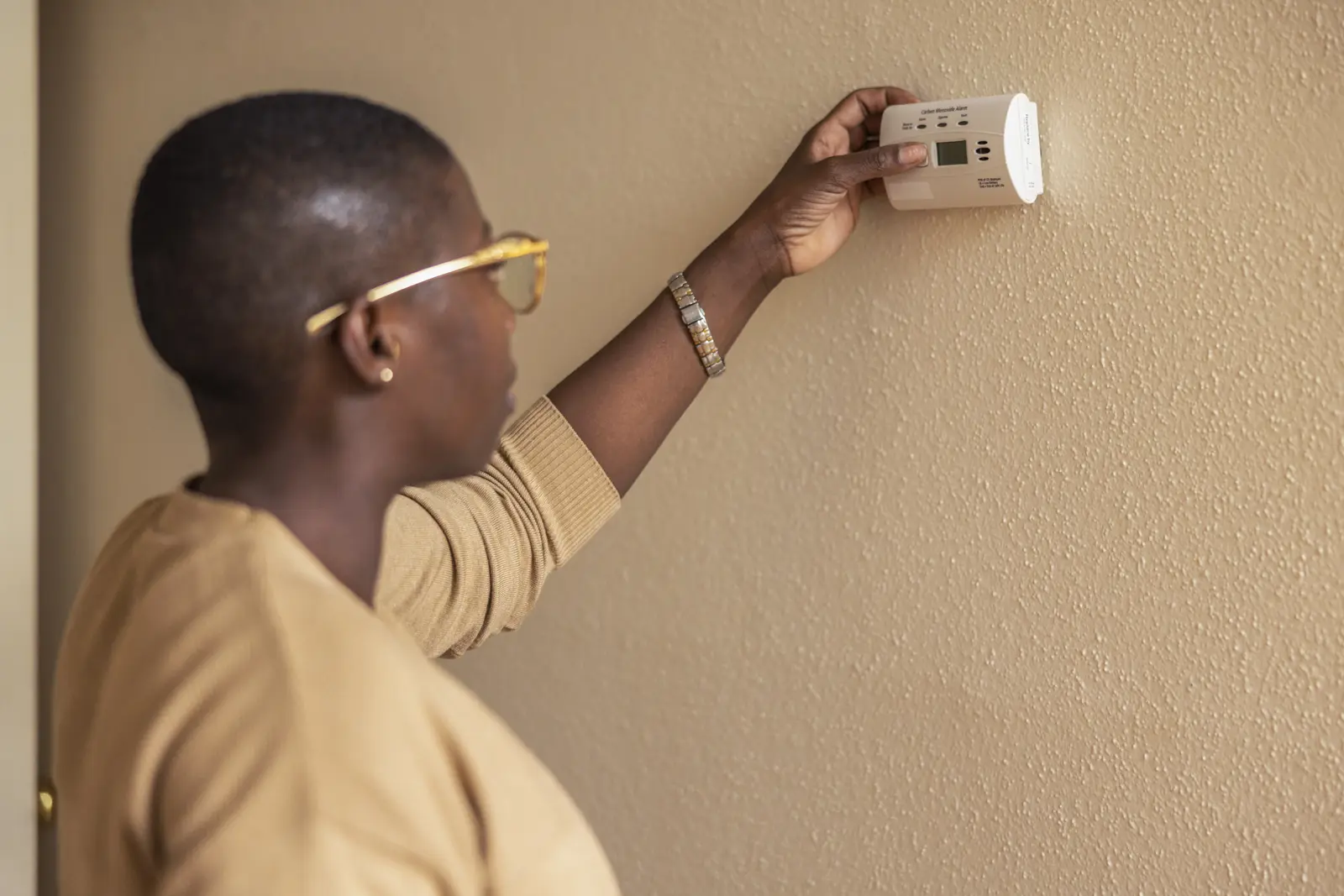
Testing a carbon monoxide alarm. On a Kidde alarm, the test plays the same 4-beep pattern the alarm uses in a real emergency. Photo: U.S. Consumer Product Safety Commission, via Wikimedia Commons, public domain (US government work).
The short answer: is it a beep or a chirp?
- Loud beeps in a repeating pattern are an alarm. Four beeps and a pause means carbon monoxide (Kidde user guide, First Alert). Three beeps and a pause is a smoke or fire alarm on First Alert units (First Alert support). Get out either way.
- Short chirps are a maintenance message. One chirp about once a minute is a low battery on both brands.
- The number of chirps tells you the problem. On Kidde’s KN-COB-B-LP, one beep every 30 seconds is an error and two beeps every 30 seconds is end of life. On First Alert, three chirps a minute is a malfunction and five chirps a minute is end of life (First Alert chirp guide).
- If it is on an alarm system, the keypad may be beeping too. Call your monitoring company before you take a detector down.
Every pattern on this page comes from the maker’s own guide or support page, opened October 30, 2026. Check the label or manual on your alarm, because patterns differ by model.
Security Dynamics is a fire and security alarm company in Hamilton Township. We wrote this for homeowners and landlords in Mercer, Ocean and Bucks County. You are standing under a beeping detector and want to know what it means. This guide starts with what to do first. Then it covers every Kidde and First Alert pattern and detectors on an alarm system. It ends with the New Jersey rule, winter causes and how to stop a chirp safely.
If It Is the 4-Beep Alarm: What to Do First
Carbon monoxide has no color and no smell. The CDC says more than 400 Americans die each year from unintentional carbon monoxide poisoning not linked to fires. More than 100,000 visit an emergency department, and more than 14,000 are hospitalized. Treat the 4-beep pattern as real until a responder tells you otherwise.
- Get everyone outside to fresh air, pets included. Do a head count at the door.
- Call 911 from outside. First Alert’s instructions say to stay in fresh air until the responder has arrived and the home has been aired out (First Alert support).
- Watch for symptoms. The CDC lists headache, dizziness, weakness, upset stomach, vomiting, chest pain and confusion. It also warns that people who are sleeping can die before they have symptoms.
- Do not go back in until emergency responders say it is safe (Kidde).
- If it sounds again within 24 hours, First Alert says to call a qualified appliance technician to check fuel-burning equipment. It also says to make sure no vehicle has been running in an attached garage.
After 911, call your gas utility. These are the lines each company publishes for a carbon monoxide call or a gas emergency:
PSE&G
1-800-880-7734Emergency Service line, to have your appliances inspected after a CO alarm (source)
New Jersey Natural Gas
800-221-0051Listed on its CO page for after you have called 911; gas leaks go to 800-427-5325 (source)
New Jersey Poison Control Center
800-222-1222Listed by New Jersey Natural Gas for carbon monoxide information (source)
PECO (Bucks County, PA)
1-800-841-4141Gas emergency line, 24 hours a day (source)
| Who | Number | What the line is for |
|---|---|---|
| PSE&G | 1-800-880-7734 | Emergency Service line, to have your appliances inspected after a CO alarm (source) |
| New Jersey Natural Gas | 800-221-0051 | Listed on its CO page for after you have called 911; gas leaks go to 800-427-5325 (source) |
| New Jersey Poison Control Center | 800-222-1222 | Listed by New Jersey Natural Gas for carbon monoxide information (source) |
| PECO (Bucks County, PA) | 1-800-841-4141 | Gas emergency line, 24 hours a day (source) |
Numbers as published on each company’s site on October 30, 2026. Call the utility that supplies your gas.
Every Beep and Chirp Pattern, by Brand
A beep is the loud alarm horn. A chirp is a short sound that means the alarm needs attention. First Alert’s support pages draw the same line: chirps are shorter than alarm beeps. The table lists each pattern from the makers’ own documents.
4 quick beeps, a pause, 4 beeps, repeating
Kidde and First Alert
Means: Carbon monoxide detected
Do: Get everyone outside, then call 911
3 loud beeps, repeating
First Alert smoke and combination alarms
Means: Smoke or heat detected (fire alarm, not CO)
Do: Get out and call the fire department from outside
1 chirp about every 60 seconds
Kidde and First Alert
Means: Low battery
Do: Replace the batteries with the type named on the alarm
1 quick beep every 30 seconds
Kidde KN-COB-B-LP
Means: Error or service condition
Do: Replace the battery; if it continues, replace the alarm
2 quick beeps every 30 seconds
Kidde KN-COB-B-LP
Means: End of unit life (10 years after power-up), no longer detects CO
Do: Replace the alarm now
Chirping every 30 seconds, 7 years after power-up
Kidde CO alarms (Kidde support page)
Means: End-of-life warning
Do: Replace the alarm now
3 chirps about once a minute
First Alert
Means: Malfunction
Do: Breaker off 1 minute, clean, test; replace if expired
5 chirps about once a minute
First Alert
Means: End of life (or backup battery not activated on a new unit)
Do: Replace the alarm; check activation on a new one
One long, continuous squeal
Kidde
Means: Unplugged or loose from the outlet, or a malfunction
Do: Reseat the plug-in unit; call Kidde if it continues
| What you hear | Brand | What it means | What to do |
|---|---|---|---|
| 4 quick beeps, a pause, 4 beeps, repeating | Kidde and First Alert | Carbon monoxide detected | Get everyone outside, then call 911 |
| 3 loud beeps, repeating | First Alert smoke and combination alarms | Smoke or heat detected (fire alarm, not CO) | Get out and call the fire department from outside |
| 1 chirp about every 60 seconds | Kidde and First Alert | Low battery | Replace the batteries with the type named on the alarm |
| 1 quick beep every 30 seconds | Kidde KN-COB-B-LP | Error or service condition | Replace the battery; if it continues, replace the alarm |
| 2 quick beeps every 30 seconds | Kidde KN-COB-B-LP | End of unit life (10 years after power-up), no longer detects CO | Replace the alarm now |
| Chirping every 30 seconds, 7 years after power-up | Kidde CO alarms (Kidde support page) | End-of-life warning | Replace the alarm now |
| 3 chirps about once a minute | First Alert | Malfunction | Breaker off 1 minute, clean, test; replace if expired |
| 5 chirps about once a minute | First Alert | End of life (or backup battery not activated on a new unit) | Replace the alarm; check activation on a new one |
| One long, continuous squeal | Kidde | Unplugged or loose from the outlet, or a malfunction | Reseat the plug-in unit; call Kidde if it continues |
Sources: Kidde KN-COB-B-LP user guide, Kidde beeping support page, First Alert, First Alert chirp guide and First Alert alarm sounds, all opened October 30, 2026. Patterns differ between models; your alarm’s label or manual is the final word.
Kidde Carbon Monoxide Alarm Beeping
Kidde publishes its patterns in two places: a support page for all its CO alarms and a user guide for each model. We used the guide for the battery-powered KN-COB-B-LP and KN-COPP-B-LP.
- 4 quick beeps, 5 seconds of silence, repeating: the carbon monoxide alarm. Kidde’s guide says it repeats for as long as dangerous conditions exist.
- One quick beep every 60 seconds: low battery. The model with a display also flashes “Lb”.
- One quick beep every 30 seconds: an error. The guide says to replace the battery, and if the beep continues, the unit has malfunctioned. The display model shows “Err”.
- Two quick beeps every 30 seconds: end of unit life, ten years after it was first powered up. The display model shows “End”. Kidde’s guide says to replace it immediately because it will not detect CO in that state.
- Chirping every 30 seconds on an older alarm: Kidde’s support page says its CO alarms begin chirping every 30 seconds seven years after first power-up. That is an end-of-life warning. The same page says a chirp every 30 seconds can also mean a malfunction. It lists Kidde product support at 1-800-880-6788.
- One long, continuous squeal: a plug-in unit that has been unplugged or has come loose from the outlet, or a malfunction (Kidde support page).
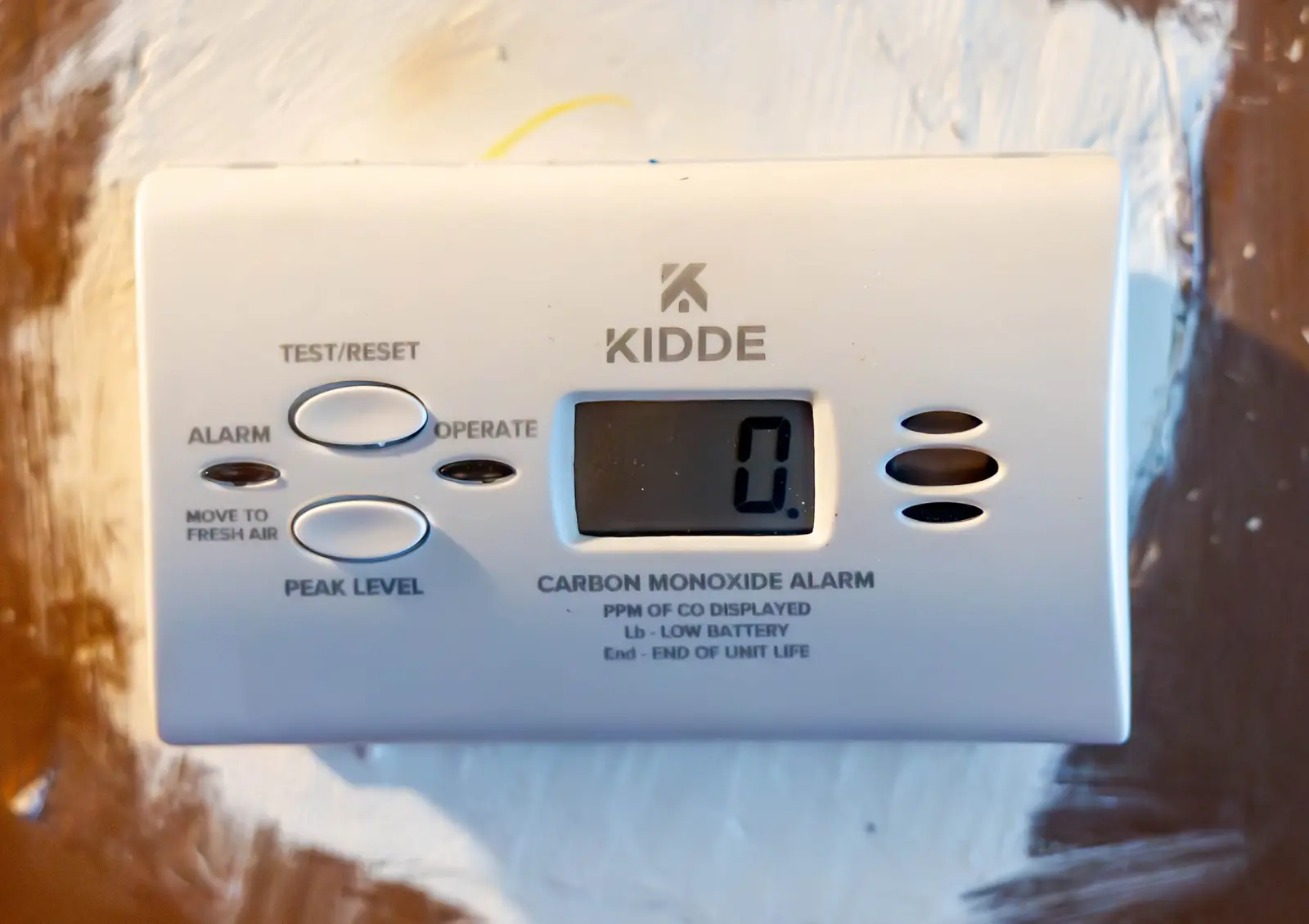
A display model also keeps a peak reading. Kidde’s CO guide says the peak memory shows levels from 11 to 999 ppm. Levels below 30 ppm will not set off the alarm. Kidde says not to ignore readings above 30 ppm. That memory helps when an alarm went off while nobody was home.
First Alert Carbon Monoxide Alarm Beeping (1, 3, 4 and 5 Beeps)
First Alert’s support site, which also covers BRK alarms, is support.brkelectronics.com. Its chirp guide and alarm sounds page give these patterns:
- 4 loud beeps, repeating: carbon monoxide. First Alert says its alarm sequences are 85 decibels, loud enough to alert people who are asleep.
- 3 loud beeps, repeating: smoke, or rising heat on a heat detector. On a combination smoke and CO alarm, this is the fire alarm.
- 1 chirp about once a minute: low battery. Other causes on the same list are batteries facing the wrong way, a drawer left partly open, a pull-tab still in place, rechargeable batteries and corroded contacts.
- 3 chirps about once a minute: malfunction. First Alert suggests turning the power off at the breaker for one minute, cleaning the alarm and testing it, and checking whether it has expired.
- 5 chirps about once a minute: end of life. The Test/Silence button hushes it for about 2 days; after about 2 to 3 weeks it cannot be silenced. Replace an alarm over 7 years old. On a brand-new unit, 5 chirps can mean the backup battery was not activated.
- Random chirps: on hardwired units, First Alert says the most common cause is the electrical installation, and it recommends an electrician.
One detail catches many people out. First Alert notes that removing the battery or unplugging the alarm will not stop a low-battery chirp. Its fix is a fresh battery.
Is It the Detector or Your Alarm System?
Some homes have a CO detector that is part of a monitored alarm system, not a stand-alone unit. These behave differently. First Alert’s chirp guide even warns that a chirp may come from another device, such as a security system, with a similar low-battery signal.
Here is one alarm-panel detector, as an example only: the 5800CO wireless carbon monoxide detector. The Honeywell 5800CO installation manual says:
“If a low battery is detected, the transmitter sends a low battery message to the control panel, which beeps and displays the detector’s zone number.”
In the same low-battery section, the manual says that after 7 days the detector’s horn chirps about every 45 seconds. A trouble condition or the end of its life also gives one chirp every 45 seconds. It also says to tell the central station before testing, because a test sends an alarm signal to the panel.
We name this model only to show how a panel detector behaves. It is not a list of what Security Dynamics installs, sells or monitors. Your own detector’s manual is the final word.
So if the house is beeping and you are not sure where from:
- Look at the keypad first. A zone number or a low-battery message points to the detector on that zone.
- Call your monitoring company before you test or remove it. A test can send an alarm to the central station.
- Do not pull a hardwired detector off the wall with the power on. First Alert says to turn off the circuit breaker before you look at any wiring.
- Use the battery your detector’s manual names. Kidde’s KN-COB-B-LP, for example, takes three AA batteries.
On a Security Dynamics system? Does your keypad show a trouble or low-battery message for a smoke or CO zone? Call us at (609) 394-8800 or request service through our security system service page. Tell us the zone number and what the keypad shows.
New Jersey’s CO Alarm Rule, and the Certificate When You Sell or Rent
The rule for homes is in the New Jersey Uniform Fire Code. People often mix up the carbon monoxide rule with the smoke alarm rule, so here are both, from the code text.
Which homes need CO alarms
One- and two-family and attached single-family dwellings, except buildings with no fuel-burning device and no attached garage
N.J.A.C. 5:70-4.19(d)
Where CO alarms go
In the immediate vicinity of the sleeping area(s)
N.J.A.C. 5:70-4.19(d)1
What kind of CO alarm
Battery, hard-wired or plug-in, listed to UL 2034 and installed under NFPA 720; or a supervised CO detection system installed under the Uniform Construction Code
N.J.A.C. 5:70-4.19(d)2
Smoke alarms (a separate rule)
On each level and outside each separate sleeping area; 10-year sealed battery alarms, effective January 1, 2019, unless the home has AC-powered alarms
N.J.A.C. 5:70-4.19(a), (c)
When you sell or rent
The owner gets a certificate of smoke alarm, carbon monoxide alarm and portable fire extinguisher compliance before the home is sold, leased or changes occupants
N.J.A.C. 5:70-2.3(a)
State fee
$45 more than 10 business days before the change of occupant, $90 at 4 to 10 business days, $161 under 4; a town with its own enforcing agency may set a different fee
N.J.A.C. 5:70-2.9(d), (f)
| Rule | What the code says | Section |
|---|---|---|
| Which homes need CO alarms | One- and two-family and attached single-family dwellings, except buildings with no fuel-burning device and no attached garage | 5:70-4.19(d) |
| Where CO alarms go | In the immediate vicinity of the sleeping area(s) | 5:70-4.19(d)1 |
| What kind of CO alarm | Battery, hard-wired or plug-in, listed to UL 2034 and installed under NFPA 720; or a supervised CO detection system installed under the Uniform Construction Code | 5:70-4.19(d)2 |
| Smoke alarms (a separate rule) | On each level and outside each separate sleeping area; 10-year sealed battery alarms, effective January 1, 2019, unless the home has AC-powered alarms | 5:70-4.19(a), (c) |
| When you sell or rent | The owner gets a certificate of smoke alarm, carbon monoxide alarm and portable fire extinguisher compliance before the home is sold, leased or changes occupants | 5:70-2.3(a) |
| State fee | $45 more than 10 business days before the change of occupant, $90 at 4 to 10 business days, $161 under 4; a town with its own enforcing agency may set a different fee | 5:70-2.9(d), (f) |
What that means if your detector is beeping:
- A dead or expired CO alarm can hold up a sale or a lease. Under 5:70-2.3(c), no certificate is issued unless the home has a CO alarm meeting UL 2034, if the home has fuel-burning appliances or an attached garage.
- The certificate is not transferable. If the change of occupant does not happen within six months, the owner applies again. For a seasonal rental unit, the enforcing agency may issue one for up to 12 months.
- Replace with a listed alarm. Look for UL 2034 on the box or label.
- Bucks County homes follow Pennsylvania rules, which this guide does not cover.
Code text read on October 30, 2026 from the Legal Information Institute’s copy of the New Jersey Administrative Code. The enforcing agency for your town issues the certificate and can confirm the fee.
Why CO Alarms Go Off More in a New Jersey Winter
PSE&G says carbon monoxide poisoning is most likely to occur in the winter. These are the winter sources the utilities, the CDC and First Alert point to:
- Portable generators after an outage. The CDC says never to use one inside a home or garage, even with doors and windows open. Run it outside, more than 20 feet from windows, doors and vents.
- Snow and ice over vents. PSE&G warns that snow, ice, nests and leaves can block appliance vents and cause CO to build up.
- A car or snow blower warming up in an attached garage. PSE&G says CO can drift from the garage into the living space.
- A furnace, boiler or water heater that is not burning cleanly. New Jersey Natural Gas says gas equipment should have a clear blue flame. A yellow or orange flame may mean a problem.
- Using a gas oven to heat the house. PSE&G and the CDC both say never to do it.
- Wind and weather. First Alert’s false alarm guide lists high gusty winds, temperature inversions and the negative pressure from exhaust fans as causes of on-again, off-again CO.
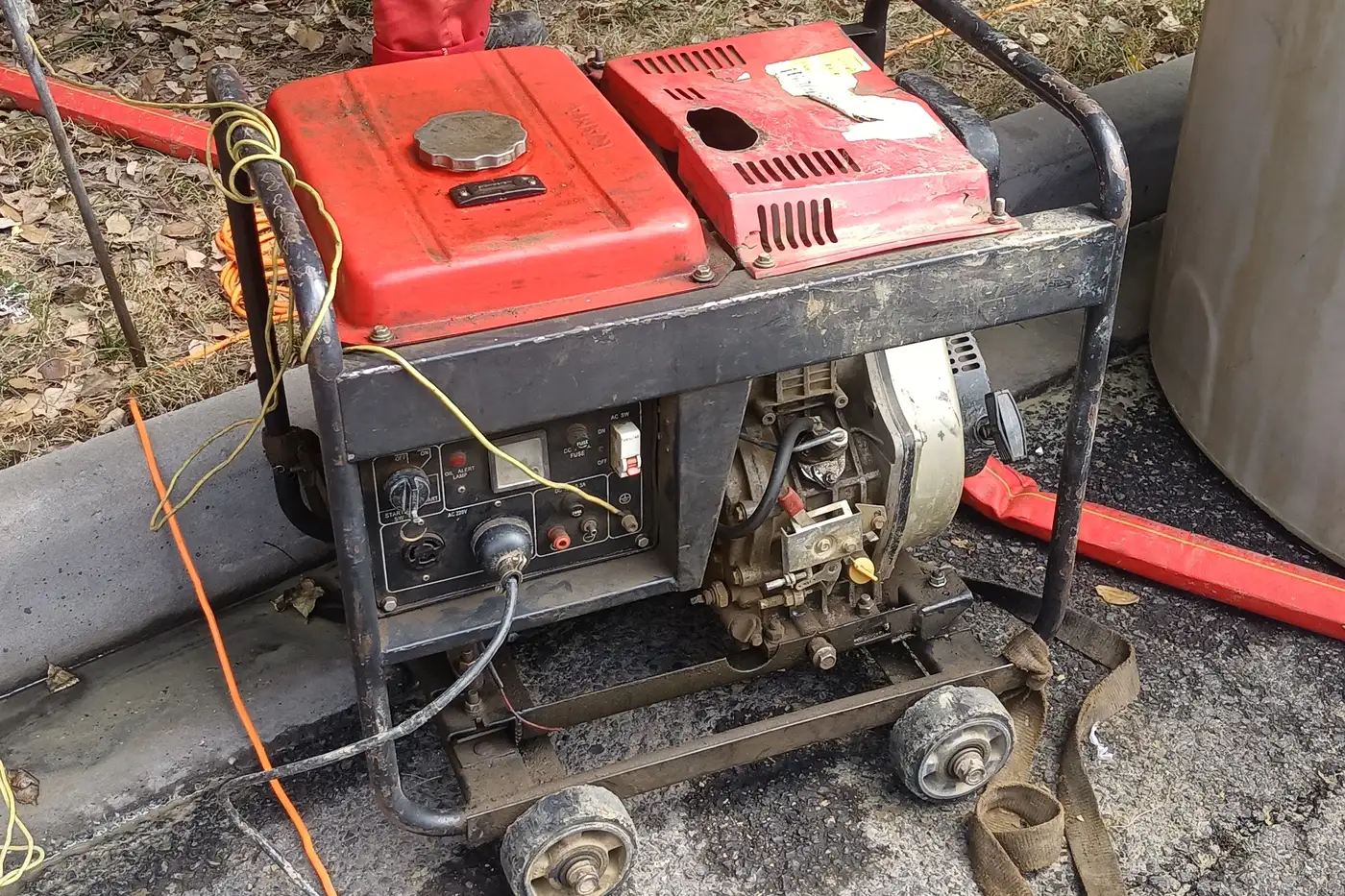
The CDC also says to have a qualified technician service your heating system, water heater and other gas, oil or coal appliances every year. Have the chimney checked or cleaned every year too. When you run a generator, the CDC says to use a battery-powered or battery-backup CO detector in the home.
Shore Homes and Empty Houses: Who Hears the Alarm?
A stand-alone CO alarm only makes noise inside the house. That is fine when someone is home. It does nothing for a shore house that sits empty all winter, a rental between tenants or a parent’s home while they are away.
- A monitored detector reports to a central station. Our home fire and smoke monitoring adds monitored smoke, heat and carbon monoxide detectors to an existing system. Our home alarm systems include carbon monoxide monitors with fire department dispatch.
- The state code allows it. 5:70-4.19(d)2 accepts a supervised carbon monoxide detection system installed under the Uniform Construction Code as an alternative to single-station alarms.
- A peak-level display helps after the fact. Kidde’s peak memory shows the highest reading since the last reset. You can see if CO rose while you were gone.
- Check the house before the season. The CDC says to check CO detector batteries when you change the clocks each spring and fall.
We serve Mercer County, Bucks County and our Ocean County service area. A business with a CO concern can start with commercial fire alarm monitoring.
How to Stop the Chirp Without Silencing a Real Alarm
- Make sure it is a chirp, not the alarm. If you hear 4 beeps and a pause, stop here, get out and call 911.
- Count the chirps and match them to the table above. Two beeps every 30 seconds on a Kidde, or five chirps a minute on a First Alert, means replace the alarm. A battery will not fix it.
- Check the date on the back. First Alert says to replace an alarm over 7 years old. The CDC says to replace a CO detector following the maker’s instructions or every 5 years. Kidde’s KN-COB-B-LP has a label on the side for the “replace by” date.
- Fit fresh batteries of the type printed on the alarm. Check that they face the right way, the drawer is shut and any pull-tab is out. First Alert says rechargeable batteries can cause chirping.
- Press the test button and listen for the 4-beep test pattern. Kidde’s guide says a working alarm plays 4 quick beeps, 5 seconds of silence and 4 quick beeps.
- Hardwired unit still chirping? Turn off the breaker before you look at wiring. First Alert lists the electrical installation as the most common cause of erratic chirps.
- Check where it is mounted. Kidde says to install CO alarms at least 15 feet from fuel-burning appliances. First Alert says 15 to 20 feet, because an alarm too close can go off from brief, local CO.
- On an alarm system, call the monitoring company before any of this.
Never leave a CO alarm without batteries to stop the noise. For a wider routine, see our security system maintenance checklist.
How Security Dynamics Can Help
Security Dynamics is based in Hamilton Township. We install, maintain and monitor home alarm systems. Our monitoring page lists smoke, heat and carbon monoxide detectors among the devices we add. Is a detector on your alarm system beeping? Start with our security system service page. Want CO detection that calls for help when nobody is home? See our home fire and smoke monitoring page.
This guide lists no Security Dynamics prices. The models named above are examples from the makers’ own documents, not a list of what we install.
Frequently Asked Questions
Why is my carbon monoxide detector beeping?
It is either sounding the alarm or asking for attention. Four quick beeps, a pause, then four more, repeating, is the carbon monoxide alarm on Kidde and First Alert units: get everyone outside and call 911. One short chirp about once a minute is the low-battery chirp on both brands. Other chirp patterns mean an error, a malfunction or the end of the alarm’s life, and the pattern differs by brand.
What does it mean when a carbon monoxide detector beeps 4 times?
Four beeps and a pause is the emergency carbon monoxide alarm. Kidde’s user guide describes it as 4 quick beeps followed by 5 seconds of silence. It repeats for as long as dangerous conditions exist. First Alert says it means carbon monoxide has been detected. Move everyone to fresh air and call 911 from outside.
Why is my carbon monoxide detector beeping 3 times?
It depends on the sound. On First Alert units, three loud beeps in a repeating pattern is the smoke or heat alarm. That includes combination smoke and CO alarms, so treat it as a fire alarm and get out. Three short chirps about once a minute on a First Alert alarm is its malfunction warning. First Alert suggests turning the power off at the breaker for one minute, then cleaning and testing the alarm. Replace it if it has expired.
Why is my carbon monoxide detector beeping 2 times?
On Kidde’s KN-COB-B-LP and KN-COPP-B-LP alarms, two quick beeps every 30 seconds is the end of unit life signal. It starts ten years after the alarm was first powered up. Kidde’s guide says to replace the alarm immediately because it will not detect carbon monoxide in that condition.
What do 5 beeps mean on a First Alert carbon monoxide alarm?
Five chirps about once a minute is First Alert’s end-of-life warning. First Alert says the Test/Silence button hushes it for about 2 days, and after about 2 to 3 weeks it can no longer be silenced. If the alarm is over 7 years old, First Alert says to replace it as soon as possible. On a brand-new unit, the same chirp can mean the backup battery was not activated.
Why does my CO detector keep chirping after I changed the battery?
First Alert lists several causes. Batteries may face the wrong way, the drawer may not be fully closed or a pull-tab may still be in place. Rechargeable batteries, corroded contacts and an expired alarm can also cause it. First Alert notes that removing the battery or unplugging the alarm will not stop a low-battery chirp. Two beeps every 30 seconds on a Kidde, or five chirps a minute on a First Alert, means the alarm has reached the end of its life. A new battery will not fix that.
What should I do if my carbon monoxide detector goes off?
Get everyone, including pets, outside to fresh air and call 911 from there. Do not go back in until emergency responders say it is safe. If the alarm sounds again within 24 hours, First Alert says to call a qualified appliance technician to look for the source. In New Jersey, PSE&G asks customers to call its emergency line at 1-800-880-7734 to have appliances inspected. New Jersey Natural Gas lists 800-221-0051 for carbon monoxide calls after 911.
Does New Jersey require carbon monoxide detectors?
Yes, in one- and two-family and attached single-family homes that have a fuel-burning device or an attached garage. N.J.A.C. 5:70-4.19 requires carbon monoxide alarms in the immediate vicinity of the sleeping areas. They must be listed to UL 2034 and installed under NFPA 720. Before one of these homes is sold, leased or changes occupants, the owner needs a compliance certificate under N.J.A.C. 5:70-2.3. It covers smoke alarms, carbon monoxide alarms and a portable fire extinguisher.
Can a CO detector on my alarm system beep at the keypad instead?
Yes. A CO detector that is part of an alarm system can report to the control panel. In the one example quoted in our alarm-system section above, a low battery makes the panel beep and show the detector’s zone number, and the detector chirps about every 45 seconds. Read the keypad first. Then call your monitoring company before you test or remove the detector, because a test can send an alarm.
Sources for the answers above are linked in the sections above.
Detector Beeping on Your Alarm System?
When you call or request service, tell us what you hear, what the keypad shows and roughly how old the detector is. If you hear the 4-beep alarm, call 911 first.
Related Services and Guides
- Home Fire & Smoke MonitoringMonitored smoke, heat and carbon monoxide detectors tied to a 24/7 central station.
- Home Alarm SystemsBurglar, fire and carbon monoxide detection for New Jersey and Pennsylvania homes.
- Security System Service in NJService and repair for the alarm system your detectors report to.
- Monitored Fire Alarm Systems GuideHow a monitored fire alarm differs from alarms that only sound in the house.
Beep patterns, code text, utility numbers and health figures on this page were checked against each linked source on October 30, 2026. Patterns differ by model, so your alarm’s own label and manual come first. This guide is general information, not a substitute for 911, your fire department or your gas utility.