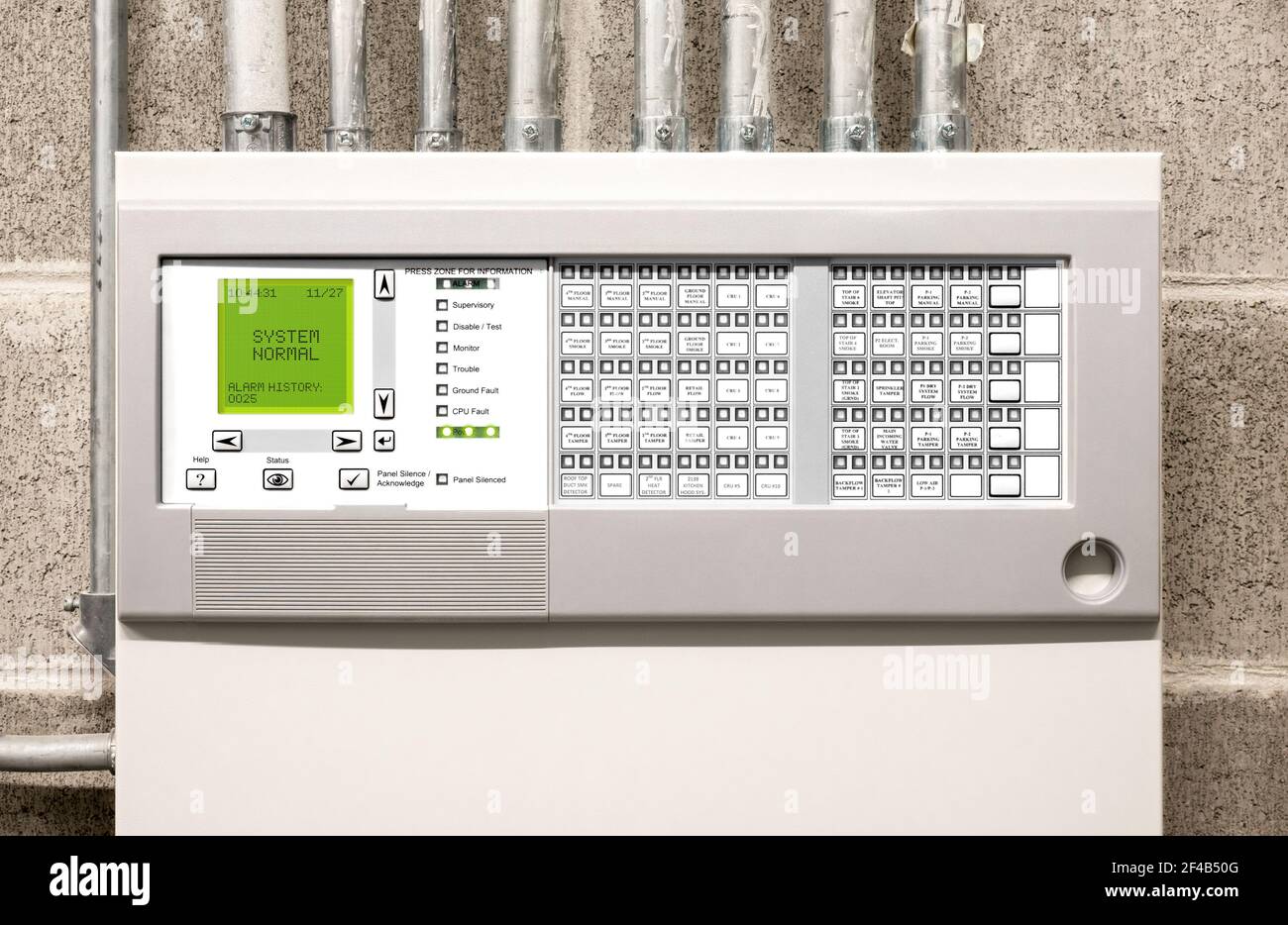
If you own or manage a commercial building in New Jersey, your fire alarm system must comply with NFPA 72 — the National Fire Alarm and Signaling Code. It is not a suggestion. It is not a guideline. It is the standard that every fire alarm system in the United States must meet, and New Jersey enforces it through the Uniform Construction Code. Fail to comply and you face fines, failed inspections, insurance problems, and — most importantly — life-safety risk for everyone in your building.
At Security Dynamics Inc., we have been designing, installing, and servicing fire alarm systems across New Jersey for 37 years. We hold NJ Fire Alarm License #P00747. We deal with NFPA 72 compliance every single day — on new installations, retrofits, inspections, and fire marshal interactions. This guide is built from that experience, not from reading the code in a vacuum.
What Is NFPA 72?
NFPA 72 is the National Fire Alarm and Signaling Code, published by the National Fire Protection Association. It is the single authoritative standard governing the design, installation, performance, inspection, testing, and maintenance of fire alarm systems and emergency communication systems in the United States.
Think of it this way: NFPA 72 tells everyone — designers, installers, inspectors, building owners, and fire marshals — exactly how a fire alarm system must work. It covers everything from where to place smoke detectors to how often you must test your notification appliances to what documentation you must keep on file.
The current edition is NFPA 72-2022, though New Jersey’s adoption cycle means the state may reference a slightly earlier edition at any given time. Regardless of which edition NJ formally adopts, local fire officials and inspectors use NFPA 72 as their benchmark for compliance.
What NFPA 72 Covers
NFPA 72 is organized into chapters covering distinct aspects of fire alarm systems:
- Chapter 10 — Fundamentals: Basic requirements that apply to all fire alarm systems, including documentation, power supplies, and system monitoring.
- Chapter 12 — Circuits and Pathways: How wiring and communication pathways must be designed for reliability and survivability.
- Chapter 14 — Inspection, Testing, and Maintenance: The schedule and methods for keeping systems compliant over their entire service life. This is the chapter that most directly affects building owners on a day-to-day basis.
- Chapter 17 — Initiating Devices: Requirements for smoke detectors, heat detectors, manual pull stations, duct detectors, waterflow switches, and other devices that start the alarm process.
- Chapter 18 — Notification Appliances: Requirements for horns, strobes, speakers, and other devices that alert building occupants.
- Chapter 23 — Protected Premises Fire Alarm Systems: Requirements for the fire alarm system within the building itself — the panel, devices, wiring, and programming.
- Chapter 24 — Emergency Communications Systems: Requirements for mass notification systems, voice evacuation systems, and two-way communication systems.
- Chapter 26 — Supervising Station Alarm Systems: Requirements for how the fire alarm signal gets transmitted to a monitoring center and then to the fire department.
For NJ building owners, the chapters that matter most in daily operations are Chapter 14 (inspection and testing), Chapter 17 (your detectors and pull stations), Chapter 18 (your horns and strobes), and Chapter 26 (your monitoring connection).
Who Must Comply with NFPA 72 in New Jersey?
The short answer: every building with a fire alarm system. But the more practical question is which buildings are required to have a fire alarm system in the first place. In New Jersey, the following must have a code-compliant fire alarm system per NFPA 72:
Commercial Buildings
- All Group A (Assembly) occupancies — restaurants, bars, theaters, churches, gyms, event venues with occupant loads over 100.
- All Group B (Business) occupancies over a certain size — offices, banks, professional buildings. Thresholds depend on building height, area, and construction type, but most multi-story office buildings require fire alarm systems.
- All Group E (Educational) occupancies — schools, daycare centers with more than 12 children.
- All Group F (Factory/Industrial) occupancies — manufacturing, fabrication, assembly plants. The threshold is typically over 12,000 sq ft or two stories.
- All Group H (High Hazard) occupancies — any building storing or using hazardous materials above threshold quantities.
- All Group I (Institutional) occupancies — hospitals, nursing homes, assisted living facilities, correctional facilities.
- All Group M (Mercantile) occupancies over a certain size — retail stores, shopping centers.
- All Group R (Residential) occupancies — hotels, motels, dormitories, apartment buildings with 3+ units.
- All Group S (Storage) occupancies — warehouses, storage buildings over certain size thresholds.
Multi-Family Residential
- Apartment buildings with 3 or more dwelling units.
- Condominiums with common areas and shared egress paths.
- Assisted living and senior housing facilities.
- Dormitories and boarding houses.
NJ-Specific Thresholds
New Jersey adopts the International Building Code (IBC) with state amendments through the NJ Uniform Construction Code (UCC), administered by the Department of Community Affairs. The NJ UCC references NFPA 72 directly for fire alarm system requirements. Key NJ-specific points:
- NJ requires fire alarm systems in buildings where the IBC mandates them, plus additional requirements for certain occupancy types under state amendments.
- All fire alarm systems must be installed by a contractor holding a valid NJ Fire Alarm License.
- All fire alarm systems must be inspected and tested per NFPA 72 Chapter 14 by a qualified inspector.
- Local fire officials (fire marshal, fire prevention bureau) have authority to require fire alarm upgrades during change-of-use, renovation, or upon discovering code violations during routine inspections.
- Certificate of Occupancy requires a passing fire alarm acceptance test per NFPA 72 before the building can be occupied.
Bottom line: If your NJ building has a fire alarm system — whether code-required or voluntarily installed — that system must comply with NFPA 72. And if your building should have a fire alarm system but does not, you have a code violation that needs to be corrected.
Types of Fire Alarm Systems Under NFPA 72
NFPA 72 does not mandate a specific system type — it sets performance requirements that different system types meet in different ways. Here are the four primary fire alarm system types you will encounter in NJ commercial buildings:
Conventional (Zoned) Fire Alarm Systems
Conventional systems divide the building into zones. Each zone has a dedicated wiring circuit connecting all devices in that area to the fire alarm control panel. When a device activates, the panel identifies the zone but not the specific device.
How it works: A smoke detector in Zone 3 activates. The panel displays “ALARM — ZONE 3.” The fire department or building staff must physically search Zone 3 to find the activated device and the source of the alarm.
NFPA 72 compliance: Conventional systems fully comply with NFPA 72 when properly designed and installed. Zone sizes must be limited so that the area to be searched is manageable — typically one zone per floor per smoke zone, with no zone exceeding 22,500 square feet.
Best for: Small to medium commercial buildings (under 10,000 sq ft), single-story retail, small offices, restaurants. Conventional systems are the most affordable option and are perfectly adequate for buildings where the zone layout makes pinpointing alarms straightforward.
Cost range: $2,000–$10,000 for a small commercial building. $1–$3 per square foot installed.
Addressable Fire Alarm Systems
Addressable systems assign a unique digital address to every device on the system — every smoke detector, heat detector, pull station, monitor module, and notification appliance. The fire alarm control panel communicates with each device individually and displays the exact device location when an alarm or trouble condition occurs.
How it works: Smoke detector at address 047 (labeled “2nd Floor, Suite 201, North Conference Room”) activates. The panel displays the exact device, its location description, and its status. No searching required.
NFPA 72 compliance: Addressable systems exceed NFPA 72 minimum requirements for device identification. They also provide superior trouble reporting — the panel can detect a single dirty or degraded detector and report it by location before it fails completely.
Best for: Medium to large commercial buildings, multi-story buildings, hospitals, schools, office complexes, any building where quick alarm source identification is critical. Addressable systems are the current industry standard for new commercial construction in NJ.
Cost range: $5,000–$30,000+ depending on building size. $2–$5 per square foot installed. The per-device cost is higher than conventional, but the labor savings from simplified wiring (devices share a communication loop rather than requiring dedicated zone wiring) often offset the device cost in larger buildings.
Voice Evacuation Systems
Voice evacuation systems replace standard horns with speakers that deliver both alarm tones and pre-recorded or live voice messages. The system can direct occupants floor by floor, zone by zone, with specific evacuation instructions rather than a generic alarm tone.
How it works: A fire is detected on the 4th floor. The system activates speakers on floors 3, 4, and 5 with a message: “Attention. A fire emergency has been reported on the 4th floor. Occupants on floors 3, 4, and 5: please proceed to the nearest stairwell and evacuate the building. Do not use elevators.” Other floors receive an alert tone and standby message.
NFPA 72 compliance: NFPA 72 Chapter 24 governs voice evacuation systems. It requires specific intelligibility standards — occupants must be able to understand the voice message clearly in all areas of the building. This means acoustic modeling, speaker placement calculations, and post-installation intelligibility testing.
Required in NJ for: High-rise buildings (over 75 feet), large assembly occupancies, airports, certain healthcare facilities, and any building where phased evacuation is part of the fire safety plan. Many NJ municipalities require voice evacuation in buildings over 4 stories.
Cost range: $10,000–$75,000+ depending on building size and speaker coverage. Voice systems cost 2–3 times more than standard horn/strobe systems due to amplifier equipment, speaker wiring, and intelligibility testing.
Mass Notification Systems (MNS)
Mass notification systems go beyond fire alarm to address all-hazard emergencies: active shooter, severe weather, chemical spill, bomb threat, or any event requiring building-wide or campus-wide communication. NFPA 72 Chapter 24 includes detailed requirements for MNS.
How it works: The system uses speakers, visual displays, text messaging, and potentially outdoor sirens to deliver real-time emergency messages. It can override the fire alarm system when a higher-priority emergency requires different instructions (e.g., shelter-in-place during an active shooter versus evacuate during a fire).
NFPA 72 compliance: Mass notification is addressed in NFPA 72 Chapter 24, Section 24.4. The key requirement is that MNS messages take priority over fire alarm messages when the emergency warrants it, and that the system is integrated with (not separate from) the building’s fire alarm infrastructure.
Required in NJ for: Not broadly required by NJ building code, but increasingly specified for government buildings, large corporate campuses, educational institutions, and healthcare facilities. DHS and FEMA recommendations have driven adoption.
Cost range: $25,000–$200,000+ depending on scope. Campus-wide systems with outdoor coverage and mobile integration are at the high end.
Key NFPA 72 Requirements Every NJ Building Owner Must Know
Here are the specific NFPA 72 requirements that building owners encounter most often during inspections, renovations, and day-to-day operations:
Detection Requirements (Initiating Devices)
NFPA 72 Chapter 17 specifies where and how detection devices must be installed:
- Smoke detectors must be installed on every floor, in every corridor, in every elevator lobby, in every HVAC duct serving over 2,000 CFM, and in specific areas based on occupancy type. Spacing must not exceed 30 feet (for spot-type detectors) in standard ceiling configurations.
- Heat detectors are used where smoke detectors would cause nuisance alarms (kitchens, garages, mechanical rooms). Spacing depends on detector type and ceiling height.
- Manual pull stations must be installed at every exit from every floor, within 5 feet of the exit door, between 42 and 48 inches above the floor. NFPA 72 requires pull stations to be unobstructed and readily accessible.
- Duct smoke detectors are required in HVAC systems serving more than 2,000 CFM to detect smoke in the air handling system and shut down the unit to prevent smoke distribution throughout the building.
- Waterflow switches must be installed on every sprinkler system riser to signal the fire alarm panel when water is flowing (indicating a sprinkler activation or leak).
- Tamper switches must be installed on every sprinkler valve to signal when a valve has been closed (which would disable the sprinkler system).
Notification Requirements (Indicating Appliances)
NFPA 72 Chapter 18 specifies how occupants must be alerted:
- Audible notification must produce a minimum of 15 dB above the average ambient sound level, or 5 dB above the maximum sound level lasting more than 60 seconds, in every occupied area. In sleeping areas (hotels, dormitories), the minimum is 75 dBA at the pillow.
- Visible notification (strobes) must be installed in all public and common areas per NFPA 72 and ADA requirements. Strobe candela ratings are specified based on room size: 15 cd for rooms up to 20×20 feet, 30 cd for rooms up to 28×28 feet, 75 cd for rooms up to 45×45 feet, and so on. Strobes must flash at 1–2 Hz and must be synchronized when multiple strobes are visible from the same location.
- Temporal-3 pattern is required for all fire alarm audible signals: three pulses, pause, three pulses, pause, repeated. This is the universally recognized fire alarm signal pattern per NFPA 72 and ISO 8201.
Monitoring Requirements
NFPA 72 Chapter 26 governs how fire alarm signals reach the fire department:
- Central station monitoring is the most common method. Your fire alarm panel transmits alarm, trouble, and supervisory signals to a UL-listed central station, which dispatches the fire department. NFPA 72 requires the signal to reach the central station within 90 seconds of activation.
- Communication pathways must be supervised. If the communication link between your building and the monitoring station fails, a trouble signal must be generated within 200 seconds. Dual-path communication (cellular + internet, or two independent pathways) is increasingly required for new installations.
- Proprietary monitoring is used by large campuses or organizations that operate their own monitoring facility on-site. NFPA 72 requires these facilities to be staffed 24/7 with trained operators.
Power Supply Requirements
- Fire alarm systems must have two independent power sources: primary (utility AC power on a dedicated circuit) and secondary (batteries).
- Batteries must be capable of powering the system in standby (non-alarm) mode for a minimum of 24 hours, followed by 5 minutes of alarm operation. Some occupancies require 60 hours of standby.
- The primary power circuit must be mechanically protected, dedicated to the fire alarm system, and clearly labeled at the electrical panel. It must not be on a GFCI or AFCI circuit.
NFPA 72 Inspection, Testing, and Maintenance Requirements
Chapter 14 of NFPA 72 is where building owners spend most of their compliance time and money. Here is the complete schedule:
Visual Inspections — Quarterly
Every 3 months, a qualified inspector must visually examine:
- All fire alarm control panels — no trouble lights, no silenced alarms, all indicators normal.
- All initiating devices — smoke detectors, heat detectors, pull stations physically present, undamaged, and unobstructed.
- All notification appliances — horns, strobes, speakers physically present, undamaged, and unobstructed.
- All wiring — no visible damage, no unauthorized modifications.
- All signage — pull station signage in place, exit signs illuminated.
- Battery date tags — batteries within replacement period.
Functional Testing — Annually
Every 12 months, a qualified technician must functionally test:
- Every smoke detector — tested with listed smoke aerosol or equivalent to confirm it activates the panel.
- Every heat detector — tested per manufacturer instructions (restorable types functionally tested, non-restorable types tested via alternate methods).
- Every pull station — mechanically operated to confirm panel activation.
- Every notification appliance — activated to confirm audible and visible operation.
- Every waterflow switch — flow tested to confirm panel activation within 90 seconds.
- Every tamper switch — physically operated to confirm panel supervisory signal.
- Every duct detector — tested with smoke aerosol to confirm panel activation and HVAC shutdown.
- Fire alarm control panel — all zone/point functions, alarm outputs, trouble outputs, supervisory outputs, and communication pathways tested.
- Monitoring communication — verified that alarm, trouble, and supervisory signals are received at the monitoring station.
- Battery load test — batteries tested under load to confirm they meet standby and alarm capacity requirements.
- Emergency voice/alarm communication — voice intelligibility tested if applicable.
Sensitivity Testing — Every 2 Years (Within First 5 Years)
Smoke detector sensitivity must be tested within 1 year after installation and every 2 years thereafter (or every 5 years if the detector’s listed sensitivity is verified through electronic means). Detectors that fall outside their listed sensitivity range must be cleaned, recalibrated, or replaced.
This is the test most building owners miss. Sensitivity drift is the number one cause of both nuisance alarms (detector too sensitive) and failure to detect (detector too insensitive). A detector can look perfectly fine on visual inspection and pass a basic functional test but still be out of sensitivity range.
Inspection and Testing Schedule Summary
| Activity | Frequency | What Is Checked |
|---|---|---|
| Visual Inspection | Quarterly (every 3 months) | Panel status, device condition, wiring, signage, batteries |
| Functional Testing | Annually (every 12 months) | Every device tested for activation, every appliance tested for output |
| Sensitivity Testing | Every 2 years (first 5 years) | Smoke detector sensitivity within listed range |
| Sensitivity Testing | Every 5 years (after first 5 years, if electronically verified) | Smoke detector sensitivity within listed range |
| Battery Replacement | Per manufacturer (typically 3–5 years) | Sealed lead-acid batteries replaced before capacity degrades |
Common NFPA 72 Violations and Penalties
After 37 years of fire alarm work in New Jersey, these are the violations we see most frequently — and the ones that cause the most problems during inspections:
1. Overdue or Missing Inspections
The most common violation in NJ. Building owners either do not know the inspection schedule or let it lapse. NFPA 72 requires quarterly visual inspections and annual functional testing. If the fire marshal shows up and your last inspection report is more than 12 months old, you have an immediate violation. Penalty: correction order, potential fines of $100–$1,000 per day until the inspection is completed.
2. Missing or Expired Inspection Documentation
Even if inspections were performed, you must have the reports on-site and available for the fire official. NFPA 72 requires records of all inspections, tests, and maintenance for the life of the system (with the most recent reports readily accessible). No report on file = no proof of compliance = same as not inspecting.
3. Obstructed or Missing Devices
Smoke detectors covered by storage shelving. Pull stations blocked by furniture. Strobes hidden behind equipment. Detectors removed during renovation and never reinstalled. All of these are NFPA 72 violations that get flagged on every fire marshal walkthrough.
4. Detector Spacing Violations
Building renovations that add walls, partitions, or drop ceilings without updating detector coverage. NFPA 72 requires detectors to be placed based on the current room configuration, not the original layout. If you subdivided an open office into private offices, each new room likely needs its own detector.
5. Disabled or Impaired Notification Appliances
Horns disconnected because tenants complained about false alarms. Strobes not installed in newly renovated restrooms. Speaker circuits turned off and never restored. Any notification appliance that is not operational is a life-safety violation — it means occupants in that area will not be alerted during a fire.
6. Monitoring Failures
Phone line monitoring on systems where the phone line was disconnected when the tenant switched to VoIP. Cellular communicators with expired SIM cards. Internet communicators on networks that were changed without updating the fire alarm connection. If your monitoring path fails silently, no one knows until the fire marshal tests it or a real emergency occurs.
7. Unauthorized Modifications
Adding devices without a permit. Removing devices without authorization. Reprogramming the panel without a licensed contractor. Any modification to a fire alarm system must be performed by a licensed fire alarm contractor and may require a permit and inspection from the local fire official.
8. Battery Failures
Batteries that are past their replacement date, batteries that fail load testing, or batteries that have been removed entirely. Battery backup is a core NFPA 72 requirement — without it, a power outage renders your fire alarm system completely non-functional.
Penalties in New Jersey
NJ fire code enforcement follows a correction order process. The fire official issues a notice of violation with a correction deadline. Failure to correct within the deadline can result in:
- Fines of $100–$2,500 per violation per day (NJ Uniform Fire Code, N.J.A.C. 5:70-2.5).
- Building closure order if the violations create imminent life-safety hazard.
- Denial of Certificate of Occupancy for new construction or change-of-use.
- Insurance policy cancellation or non-renewal.
- Personal liability for building owners and property managers if a fire occurs and the system was not compliant.
NJ Adoption of NFPA 72: How the NJ Uniform Construction Code Works
New Jersey does not write its own fire alarm code from scratch. Instead, the state adopts national model codes and standards through the NJ Uniform Construction Code (UCC), which is administered by the Department of Community Affairs (DCA). Here is how it works:
- The NJ UCC adopts the International Building Code (IBC) with NJ-specific amendments as the building sub-code.
- The IBC references NFPA 72 as the standard for fire alarm system design, installation, and testing. When the IBC says “fire alarm system per NFPA 72,” that makes NFPA 72 legally enforceable in NJ.
- The NJ Uniform Fire Code (N.J.A.C. 5:70) references NFPA 72 for ongoing inspection, testing, and maintenance of fire alarm systems in existing buildings. This is what gives fire marshals authority to inspect your fire alarm system and issue violations.
- NJ amendments may add requirements beyond the base IBC/NFPA 72 standards. For example, NJ has specific requirements for fire alarm licensing, certain occupancy types, and inspection documentation retention.
What this means practically: when a fire official or inspector cites NFPA 72, they are citing legally adopted and enforceable code in New Jersey. It is not optional guidance — it carries the same legal weight as any other building code requirement.
Fire Alarm Inspection Checklist: What Inspectors Check
When a fire marshal or fire inspector visits your NJ building, here is exactly what they look at regarding your fire alarm system. Use this as your own pre-inspection checklist:
Documentation Review
- Current annual inspection report (within the last 12 months).
- Most recent quarterly visual inspection reports.
- Sensitivity test report (if due within the current cycle).
- Record of drawings — as-built diagrams of the fire alarm system showing device locations, wiring paths, and panel configuration.
- Maintenance and repair records for any deficiencies found and corrected.
- Monitoring certificate from your central station (UL listed).
- Permit records for any recent modifications.
Panel Inspection
- Panel is in normal operating condition (no active alarms, troubles, or supervisory signals that have not been addressed).
- Panel displays are functioning.
- Event log shows recent activity consistent with a monitored, tested system.
- Battery date labels are present and batteries are within replacement period.
- Panel area is clean, accessible, and properly illuminated.
- As-built documentation is posted at or near the panel.
Device Walkthrough
- Smoke detectors physically present, clean, unobstructed (18 inches of clear space in all directions).
- Heat detectors present and undamaged.
- Pull stations at every exit, unobstructed, between 42 and 48 inches AFF, with signage.
- Strobes present in all public/common areas, properly mounted, not obstructed.
- Horns/speakers present and not covered or disconnected.
- Duct detectors accessible for testing (access panels present).
- Waterflow and tamper switches present on all sprinkler risers.
Functional Spot-Checks
Inspectors may activate one or more devices to verify the system responds correctly. Common spot-checks:
- Pull a pull station — confirm panel activates alarm, notification appliances sound, and monitoring station receives the signal.
- Activate a waterflow switch — confirm panel indicates waterflow alarm.
- Close a tamper switch — confirm panel indicates supervisory condition.
- Check battery voltage under normal and loaded conditions.
How to Prepare for a Fire Marshal Inspection
Fire marshal inspections in NJ are often unannounced. The best preparation is continuous compliance — not cramming the week before. Here is how to stay ready year-round:
Keep Your Inspection Reports On-Site
Maintain a fire alarm binder at the fire alarm control panel. Include the most recent annual inspection report, all quarterly visual inspection reports from the past 12 months, sensitivity test reports, and any maintenance/repair records. Digital copies are acceptable as a backup, but physical copies at the panel are what the fire official will look for first.
Fix Deficiencies Promptly
When your fire alarm contractor identifies deficiencies during an inspection, get them fixed before the next inspection cycle — not at the next inspection. An inspection report showing the same deficiency for multiple cycles is a red flag that invites closer scrutiny.
Maintain Your Monitoring
Verify your monitoring connection is active. If you changed phone carriers, internet providers, or building IT infrastructure, confirm with your fire alarm contractor that the monitoring path was not disrupted. Have your monitoring company send a test signal at least monthly.
Walk Your Building Monthly
Assign a building staff member to walk the building once a month looking for obvious issues: obstructed detectors, blocked pull stations, damaged notification appliances, storage stacked too close to sprinkler heads. Document these walks. Fire officials appreciate building owners who demonstrate proactive attention to fire safety.
Communicate with Tenants
Tenants cause most device obstruction and modification violations. Set clear lease provisions about fire alarm devices: no covering detectors, no hanging items from sprinkler pipes, no blocking pull stations, no modifications without building management approval. Include fire alarm compliance in tenant move-in orientations.
Keep Your License and Contractor Current
Make sure your fire alarm contractor’s NJ license is active. Make sure your monitoring company’s UL listing is current. Inspectors will verify these. Using an unlicensed contractor or an unlisted monitoring company is itself a violation.
Cost of NFPA 72 Compliance
NFPA 72 compliance has three cost components: the initial system, ongoing inspection and testing, and corrective maintenance. Here is what NJ building owners typically spend:
System Design and Installation
| System Type | Cost Per Sq Ft | 10,000 Sq Ft Example |
|---|---|---|
| Conventional (zoned) | $1–$3 | $10,000–$30,000 |
| Addressable | $2–$5 | $20,000–$50,000 |
| Voice evacuation | $4–$10 | $40,000–$100,000 |
| Mass notification | $5–$15+ | $50,000–$150,000+ |
These costs include engineering design, equipment, installation labor, programming, acceptance testing, and permit fees. Retrofit installations in existing buildings typically cost 20–40% more than new construction due to working around existing infrastructure.
Ongoing Inspection and Testing Costs
| Service | Frequency | Typical Cost |
|---|---|---|
| Quarterly visual inspection | 4 times per year | $150–$400 per visit |
| Annual functional test | Once per year | $500–$2,500+ (depends on system size) |
| Sensitivity testing | Every 2 years | $300–$1,500 (depends on detector count) |
| 24/7 monitoring | Monthly | $30–$75 per month |
| Battery replacement | Every 3–5 years | $100–$500 per replacement |
Total annual compliance budget: A typical NJ commercial building with a standard addressable fire alarm system should budget $1,500–$4,000 per year for inspection, testing, and monitoring. Larger buildings or those with voice evacuation systems should budget $3,000–$8,000+ per year.
Corrective Maintenance Costs
When inspections reveal deficiencies, they must be corrected. Common corrective costs:
- Replace smoke detector: $150–$400 installed (includes device and labor).
- Replace strobe: $200–$500 installed.
- Replace pull station: $150–$350 installed.
- Replace panel batteries: $100–$500 depending on battery size.
- Repair or replace communicator: $300–$1,200 depending on type.
- Add missing detector coverage (renovation area): $300–$800 per device including wiring.
Security Dynamics: NJ Fire Alarm Experts Since 1989
Security Dynamics Inc. provides complete NFPA 72-compliant fire alarm services for NJ commercial properties. We hold NJ Fire Alarm License #P00747 and have been designing, installing, inspecting, and servicing fire alarm systems across New Jersey for 37 years.
What We Do
- System design and engineering — We design fire alarm systems to NFPA 72 and NJ UCC requirements. We handle device layout, notification appliance placement calculations, wiring design, panel programming specifications, and permit submissions.
- Installation — Our NJ-licensed technicians install conventional, addressable, and voice evacuation fire alarm systems. We install in new construction, retrofit existing buildings, and upgrade aging systems to current code.
- Inspection and testing — We perform all NFPA 72 Chapter 14 inspections: quarterly visual, annual functional, sensitivity testing, and battery testing. Every inspection produces a detailed report suitable for fire official review.
- 24/7 monitoring — Our UL-listed central monitoring station receives alarm, trouble, and supervisory signals from your fire alarm system and dispatches the fire department when needed.
- Service and repair — When devices fail, communicators drop, or panels need repair, our service team responds. We carry stock on the most common devices and maintain relationships with all major fire alarm manufacturers for fast parts sourcing.
- Code consulting — Not sure what your building requires? We evaluate your occupancy type, building size, and construction type against NJ UCC and NFPA 72 requirements and tell you exactly what you need — no more, no less.
Frequently Asked Questions
What is the difference between NFPA 72 and NFPA 101?
NFPA 72 is the National Fire Alarm and Signaling Code — it covers fire alarm system design, installation, inspection, testing, and maintenance. NFPA 101 is the Life Safety Code — it covers building design features like exits, egress paths, occupancy limits, and fire protection features. NFPA 101 tells you when a fire alarm system is required in a building. NFPA 72 tells you how that fire alarm system must be designed and maintained. NJ enforces both through the Uniform Construction Code.
How often does NFPA 72 require fire alarm inspections?
NFPA 72 Chapter 14 requires quarterly (every 3 months) visual inspections and annual (every 12 months) functional testing of all fire alarm system components. Smoke detector sensitivity testing is required within the first year of installation and every 2 years thereafter. Battery replacement follows manufacturer recommendations, typically every 3–5 years for sealed lead-acid batteries.
What happens if my fire alarm system fails an NFPA 72 inspection?
Your inspection contractor documents the deficiencies in the inspection report. You have a window (determined by the severity of the deficiency and local fire official discretion) to correct the issues. Critical deficiencies that create immediate life-safety hazard (non-functional panel, no monitoring, disabled notification appliances) may require immediate correction. Non-critical deficiencies (dirty detector, missing signage) typically get a 30–90 day correction window. Failure to correct results in fire code violation notices and potential fines.
Can I do my own fire alarm inspections?
No. NFPA 72 requires that inspections and testing be performed by “qualified personnel” — individuals trained and experienced in fire alarm systems. In New Jersey, fire alarm work must be performed by contractors holding a valid NJ Fire Alarm License. Building maintenance staff can perform basic visual checks (confirming devices are present and unobstructed), but the formal inspection, functional testing, and sensitivity testing must be done by a licensed contractor.
Does NFPA 72 require my fire alarm to be monitored?
NFPA 72 itself does not universally require monitoring — it defines the requirements for monitoring when it is required or provided. However, the NJ Uniform Construction Code and NJ Uniform Fire Code require central station monitoring for most commercial fire alarm systems. Practically speaking, if your NJ building has a code-required fire alarm system, it almost certainly must be monitored by a UL-listed central station.
What is the difference between a conventional and addressable fire alarm system?
A conventional system divides the building into zones; when a device activates, the panel identifies the zone but not the specific device. An addressable system assigns a unique address to every device; when a device activates, the panel identifies the exact device and its programmed location description. Addressable systems provide faster emergency response (no searching for the alarm source), better maintenance (individual device diagnostics), and are the standard for new commercial construction. Both types comply with NFPA 72 when properly designed.
How much does an NFPA 72-compliant fire alarm system cost?
For NJ commercial buildings: conventional systems cost $1–$3 per square foot installed; addressable systems cost $2–$5 per square foot; voice evacuation systems cost $4–$10 per square foot. A 10,000 sq ft commercial building with an addressable fire alarm system typically costs $20,000–$50,000 installed. Annual inspection, testing, and monitoring adds $1,500–$4,000 per year. Exact costs depend on building size, occupancy type, construction type, and system complexity.
Does NFPA 72 apply to residential buildings?
NFPA 72 applies to fire alarm systems in residential occupancies that are required by building codes — this includes apartment buildings with 3+ units, condominiums, dormitories, and assisted living facilities. Single-family homes and two-family homes in NJ fall under the NJ Residential Code, which requires smoke and CO alarms but does not typically require a full NFPA 72-compliant fire alarm system.
What records do I need to keep for NFPA 72 compliance?
NFPA 72 requires you to maintain records of all inspections, tests, and maintenance for the life of the system. At minimum, keep on-site: all annual inspection reports, all quarterly visual inspection reports, sensitivity test reports, maintenance and repair records, system as-built drawings, and your monitoring certificate. Inspectors expect to see at least the most recent 2–3 years of documentation readily accessible at the fire alarm panel.
My building was renovated. Do I need to update the fire alarm system?
Almost certainly yes. Any renovation that changes the building layout — adding walls, removing walls, changing ceiling types, adding rooms, changing occupancy type — requires a review of fire alarm device placement per NFPA 72. New rooms need detectors. Changed ceiling configurations may require device relocation. Changes in occupancy type may require additional devices or different system types. Your fire alarm contractor should review the renovation plans and update the fire alarm system accordingly. A permit may be required.
Next Steps
NFPA 72 compliance is not a one-time event — it is an ongoing responsibility that requires quarterly inspections, annual testing, regular maintenance, and prompt correction of deficiencies. The good news is that a well-maintained fire alarm system protects your building, your tenants, your investment, and your liability position. The cost of compliance is predictable and modest compared to the cost of a fire in an unprotected or non-compliant building.
If your NJ building needs a fire alarm system assessment, an inspection to get current on NFPA 72 compliance, or a quote for a new or upgraded system, Security Dynamics Inc. can help. We have been doing this for 37 years and we know NJ fire code inside and out.
Get a free fire alarm assessment: Call (609) 394-8800 or email sdynamicsnj@gmail.com. We serve commercial properties throughout New Jersey.