Fire Alarm Inspection Cost in NJ (2026)
Cost guides checked in October 2026 put the annual test of a commercial fire alarm at $300 to $1,000 for a small building and $3,500 to $8,000 for a large one, or about $12 to $30 per device. In New Jersey the building also pays a state or township registration fee, $108 to $4,781 a year for a life hazard use. Security Dynamics quotes each building on its own.
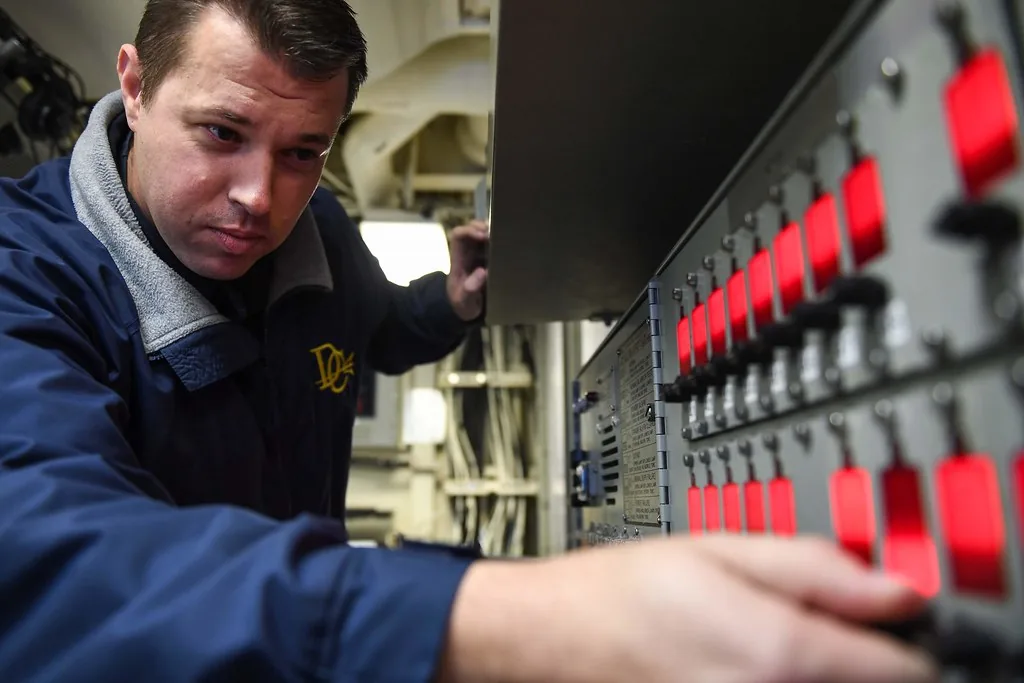
A technician checks an alarm panel’s indicator lights. The panel test is one line on an inspection bill. Photo: U.S. Navy, Mass Communication Specialist 1st Class Theron J. Godbold, via Flickr, public domain (US government work).
The short answer: what a fire alarm inspection costs in 2026
- The annual test, by building size: $300 to $1,000 for 25 to 50 devices, $1,000 to $3,500 for 50 to 150, $3,500 to $8,000 for 150 to 500, and $7,000 to $15,000 or more above 500 devices, in Total Fire Protection’s February 2026 guide, which says it compiled data from more than 250 commercial facilities across the United States. TFP itself serves New York City’s five boroughs, Long Island and New Jersey.
- Per device: $12 to $30 in that guide; $6 to $15 for the testing labor alone at Up To Code (March 2026), plus $5 to $15 per smoke detector when sensitivity testing is due.
- New Jersey’s own fees, paid to the state or town: $108 to $4,781 a year to register a life hazard use (N.J.A.C. 5:70-2.9), or, for a non-life-hazard business in Hamilton Township, $50 to $700 a year by floor area (Chapter 215).
- What is not in the test price: repairs, a re-inspection ($50 to $350), after-hours testing ($205 to $245 an hour) and, if the system fails and the fire official orders it, a fire watch ($52 per hour per person in Hamilton Township).
These are other companies’ published prices and government fee schedules, opened October 22, 2026. None of them is a Security Dynamics price. Security Dynamics quotes each building on its own after it knows the panel, the device count and the fire official’s requirements.
This guide is for New Jersey building owners, property managers and facility leads who get a bill for the annual fire alarm inspection and want to know whether it is in line. It covers what other companies publish for the test, how the price is built per device and per visit, how often each device is tested under NFPA 72, what makes the bill bigger, the New Jersey registration, permit and fire watch fees that are separate from the contractor’s test, and where sprinklers fit. For what the inspector actually checks, see our commercial fire inspection checklist; for the code itself, our NFPA 72 requirements guide for New Jersey.
What Other Companies Publish for the Annual Test, Checked October 2026
Most fire alarm companies quote the test rather than post a price. The table collects the published ranges we opened on October 22, 2026, with where each company works and the date on its page. Only one of them, Total Fire Protection, names New Jersey in its service area; the rest are other states, so treat them as a sanity check, not a local rate.
| Company | What is priced | Published price | Source |
|---|---|---|---|
| Total Fire ProtectionNYC, Long Island and New Jersey | Small building, under 5,000 sq ft, 25 – 50 devices | $300 – $1,000 a year ($12 – $20 per device) | Cost guidePublished Feb 25, 2026 |
| Total Fire ProtectionNYC, Long Island and New Jersey | Medium building, 5,000 – 15,000 sq ft, 50 – 150 devices | $1,000 – $3,500 a year ($15 – $23 per device) | Cost guidePublished Feb 25, 2026 |
| Total Fire ProtectionNYC, Long Island and New Jersey | Large building, 15,000 – 50,000 sq ft, 150 – 500 devices | $3,500 – $8,000 a year ($18 – $25 per device) | Cost guidePublished Feb 25, 2026 |
| Total Fire ProtectionNYC, Long Island and New Jersey | Extra large, 500 or more devices | $7,000 – $15,000+ a year ($14 – $30 per device) | Cost guidePublished Feb 25, 2026 |
| County FireNew York City | Under 50 / 50 – 150 / 150 – 400 / 400+ devices | $300 – $500 / $500 – $900 / $900 – $1,500 / $1,500 – $3,500+ | Cost guide2026 table, opened Oct 22, 2026 |
| American AlarmAtlanta | 1 – 20 / 21 – 100 / over 100 devices | $300 – $1,000 / $1,000 – $3,500 / $7,000 – $8,000 | Cost guidePublished Jul 16, 2026 |
| Majors Fire & SecurityFlorida | Annual contract, under 25 / 25 – 100 / 100 – 250 devices, usually two visits | $400 – $800 / $800 – $2,000 / $2,000 – $5,000 | Cost guidePublished May 26, 2026 |
| EssentialContractor pricing guide | Annual, under 25 / 25 – 100 / 100+ devices | $250 – $500 / $500 – $1,500 / $1,500 – $5,000+ | Cost guidePublished Sep 22, 2026 |
| Security & LifeNorth Carolina, South Carolina, Georgia | 15 – 40 devices / 100 – 300 devices | $350 – $800 / $1,000 – $3,200 | Cost guideUndated, opened Oct 22, 2026 |
| Redwood City AlarmsCalifornia | Under 10,000 / 10,000 – 50,000 / over 50,000 sq ft | $300 – $800 / $800 – $2,000 / $2,000 – $5,000+ | Cost guidePublished May 29, 2026 |
| Grice SystemsGeorgia | Annual inspection and test, one line in an installation guide | $250 – $900 a year | Cost guide2025 guide, opened Oct 22, 2026 |
Swipe the table sideways to see every column.
Other companies’ published prices and cost-guide ranges, not Security Dynamics prices or quotes. Majors notes that an annual contract typically includes two scheduled visits; Security & Life prices the semi-annual visit at a third to a half of the annual one.
Per Device, Per Visit or Per Year: How the Bill Is Built
Most of the guides price the test from the device count. Up To Code puts the functional-testing labor at $6 to $15 per device and says the cost scales roughly linearly, with a 200-device system costing about four times what a 50-device system costs, because each device needs its own functional test. Total Fire Protection’s building-size ranges work out to $12 to $20 per device in a small building, $18 to $25 in a large one and $14 to $30 above 500 devices.
Visits are priced separately when they are not bundled. Total Fire Protection lists a monthly visual at $50 to $100, a semi-annual test at $150 to $400, a quarterly test of selected devices at $100 to $300 and the annual test at $300 to $8,000 or more. Essential lists a quarterly visual at $150 to $350 and sensitivity testing at $8 to $15 per detector.
Worked example: a 100-device office in Hamilton Township
At Total Fire Protection’s medium-building range (50 to 150 devices), the annual test is $1,000 to $3,500. At Up To Code’s labor rate, 100 devices at $6 to $15 is $600 to $1,500 before sensitivity testing on the smoke detectors, which is due in year one and then every two years. Our arithmetic, from the two guides.
If the office is a non-life-hazard business between 5,000 and 10,000 square feet, Hamilton Township’s registration fee is $200 a year (category B-3). If the building is a registered life hazard use, the state fee is set by its type, $108 to $4,781. Neither fee goes to the inspection contractor.
What the Annual Test Covers, and How Often Each Device Is Tested
NFPA 72 sets the schedule, and the schedule sets how many visits you pay for. Most devices get a visual inspection every six months and a functional test every year. The 2025 edition moved waterflow and tamper switches to a six-month test and no longer accepts magnets for smoke detector functional testing, as Up To Code summarizes Table 14.3.1. Which edition applies to your building is the fire official’s call, so ask before you sign a contract that bundles visits.
| Device | Visual inspection | Functional test |
|---|---|---|
| Control panel | Daily or weekly by staff | Annual by the technician |
| Smoke detectors | Every 6 months | Annual; sensitivity in year 1, then every 2 years |
| Heat detectors | Every 6 months | Annual |
| Duct smoke detectors | Every 6 months | Annual |
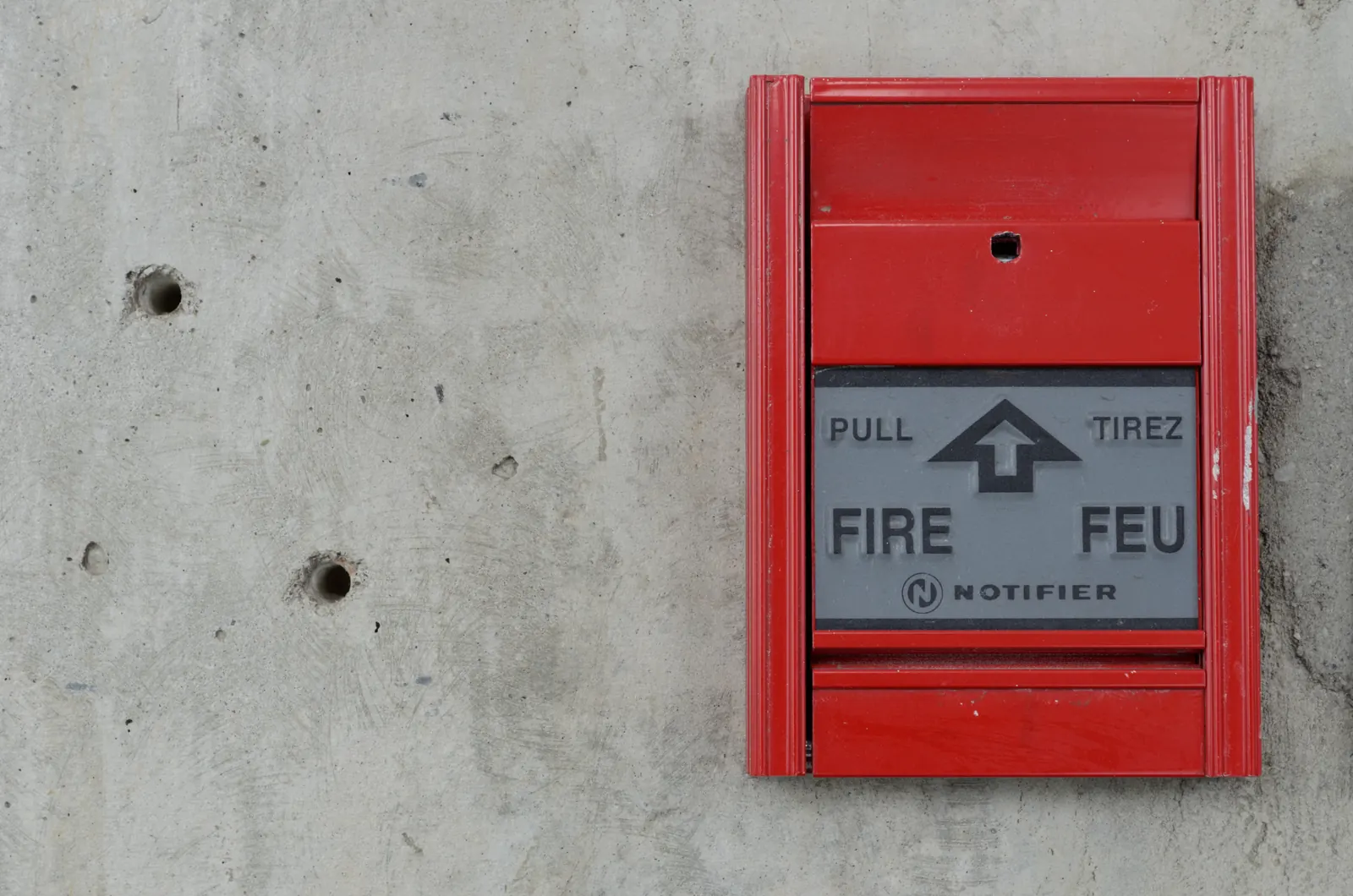
| Manual pull stations | Every 6 months | Annual |
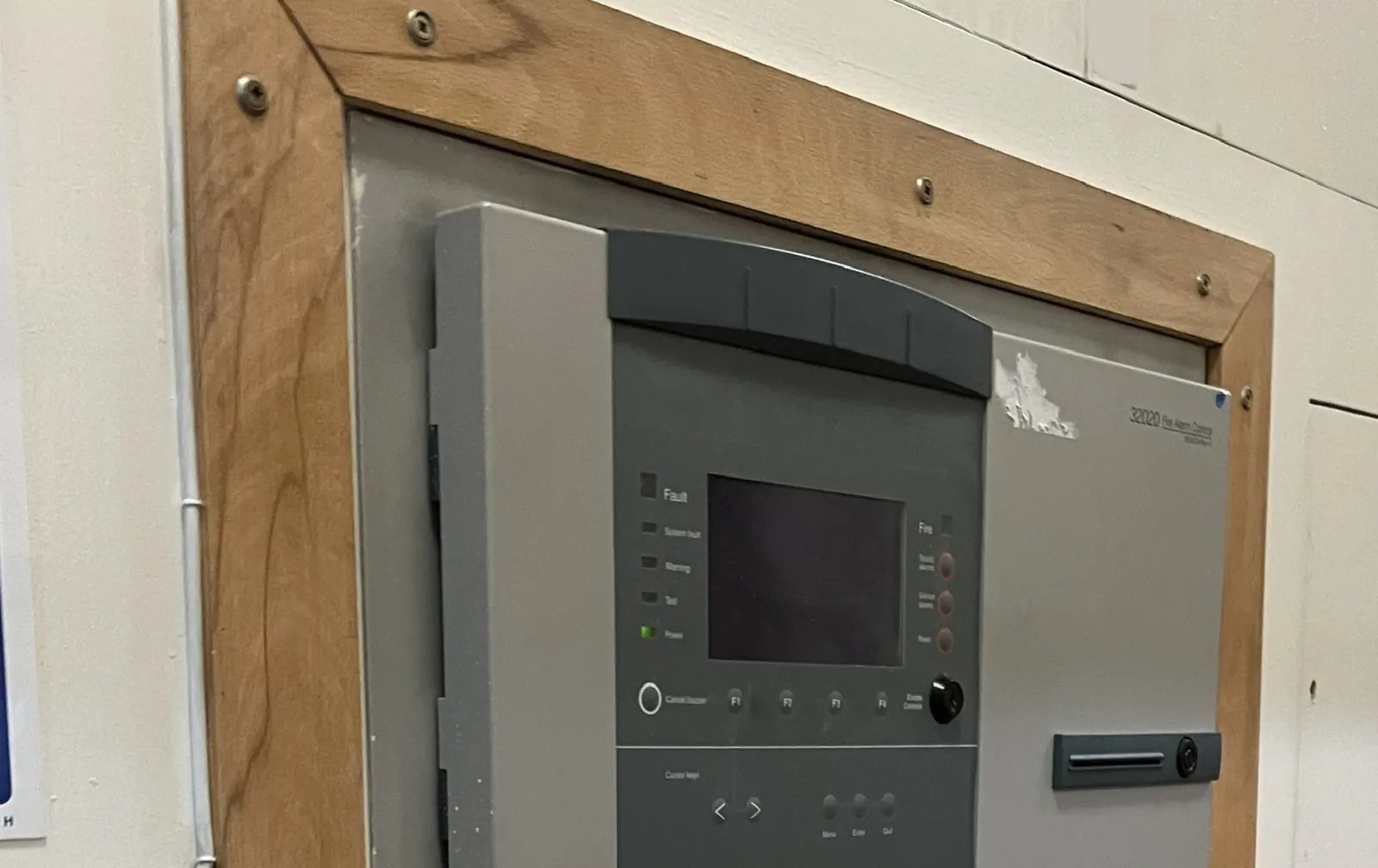
| Waterflow and tamper switches | Every 6 months | Every 6 months (2025 edition; was annual) |
| Horns and strobes | Every 6 months | Annual |
| Signal to the central station | Monthly path test by the station | Annual end to end |
Swipe the table sideways to see every column.
NFPA 72 (2025) Table 14.3.1 as summarized by Up To Code, March 25, 2026, with the panel battery, communicator and notification items as described by Security & Life. Our NFPA 72 guide covers the code in full.
How long the visit takes
Action Fire & Alarm says most inspections take two to four hours, and that large facilities can take a full day or several visits. Security Dynamics’ own inspection service page says a small office system with one panel is often completed in a partial day, while large or multi-tenant facilities can require multiple visits, coordinated notification and after-hours testing windows. Each of those adds labor, which is why two buildings with the same device count can get different quotes.
The same guide lists the problems inspections frequently reveal: dead batteries, dirty sensors, damaged devices, outdated equipment, obstructed devices, wiring problems and programming errors. Every one of those is a repair priced outside the test.
What Makes the Bill Bigger
Two systems with the same device count can be hundreds of dollars apart. These are the factors the guides put numbers on.
Sprinkler integration
Waterflow and tamper switches add 20 to 30 percent at Total Fire Protection, and under the 2025 edition they are tested every six months.
Specialized detectors
VESDA, gas and infrared detectors add 15 to 25 percent (Total Fire Protection). Sensitivity testing runs $5 to $15 per smoke detector when it is due (Up To Code).
High ceilings and lifts
High ceilings add 10 to 20 percent, with a scissor lift around $600 a day (Total Fire Protection). Redwood City Alarms prices lift rental at $300 to $600 a day.
Elevator fire service
Elevator fire service adds 10 to 15 percent, and Total Fire Protection notes it needs the elevator reset key.
Addressable vs. conventional
Minus 5 to plus 10 percent (Total Fire Protection), whose note is that an addressable system is easier to troubleshoot.
After-hours testing
Up To Code puts the after-hours premium at $205 to $245 an hour, typical, it says, for buildings that cannot interrupt operations during the day. Total Fire Protection quotes the same range for healthcare facilities.
Costs that show up after the test
- Repairs. Redwood City Alarms says the annual inspection does not typically include the cost of repairs and that a repair is billed separately. Security & Life says deficiencies found during the test are quoted at the on-site rate before the work starts.
- Re-inspection. A return visit to confirm a fix is $50 to $200 at Total Fire Protection and $150 to $350 at Up To Code.
- Failed access. In a multi-family building, Up To Code says a unit the technician cannot get into is billed as a re-inspection ($150 to $400) when the technician comes back for it.
- Batteries. Replacement runs $30 to $200 (Total Fire Protection). The panel’s standby batteries get a load test every six months, per Security & Life, and dead batteries head Action Fire & Alarm’s list of common findings.
- Monitoring and listing. Total Fire Protection lists monitoring at $25 to $100 a month and a UL certificate at $495 to $1,295 where one is required. Our monitoring cost guide has the published monthly prices.
- Missing records. A system with no drawings, no prior reports and no device list takes longer to test, because the technician has to build the list on site. Keep last year’s report where the next inspector can find it.
New Jersey Fees That Are Not the Contractor’s Bill
Two different people inspect a New Jersey commercial building, and each one costs money. The contractor tests the fire alarm under NFPA 72. The fire official inspects the building under the Uniform Fire Code, and the building pays the state or the town for the privilege. Registered life hazard uses are inspected at least once every 12 months (Types A and B) or once every three months (Types C and D), and after each annual inspection the owner has 30 days to file for the certificate of inspection, which is not issued until violations are corrected (N.J.A.C. 5:70-2.5).
| Fee | Amount | Who sets it |
|---|---|---|
| Life hazard use registration, Type Aa (lowest A type) | $108 a year | State, N.J.A.C. 5:70-2.9 |
| Life hazard use registration, Type Ae, and the cap for any K-12 school building | $214 a year | State, N.J.A.C. 5:70-2.9 |
| Life hazard use registration, Type Ba – Bq | $170 – $3,984 a year | State, N.J.A.C. 5:70-2.9 |
| Life hazard use registration, Type Ca – Ci | $697 – $3,677 a year | State, N.J.A.C. 5:70-2.9 |
| Life hazard use registration, Type Da – Dc (highest) | $2,428 – $4,781 a year | State, N.J.A.C. 5:70-2.9 |
| Permit application, Type 1 / 2 / 3 / 4 | $54 / $214 / $427 / $641 | State schedule, N.J.A.C. 5:70-2.9; a town with its own fire enforcement may set its own |
| Non-life-hazard business registration, 500 sq ft or less up to 200,000 – 300,000 sq ft | $50 – $700 a year | Hamilton Township, Chapter 215, Section 215-8 |
| Certificate of fire code status | $44 | Hamilton Township, Chapter 215, Section 215-8 |
| Fire watch coverage | $52 per hour per person | Hamilton Township, Chapter 215, Section 215-8 |
Swipe the table sideways to see every column.
Sources, opened October 22, 2026: N.J.A.C. 5:70-2.9 (fees amended effective October 2, 2017) and Hamilton Township Code Chapter 215, Section 215-8 B. Where more than one life hazard use sits under one ownership at one location, the highest is registered at full fee and the others at half. The state fee is due within 30 days of the bill, and an owner who ignores an order to register can be ordered to pay $500 for each registration (N.J.A.C. 5:70-2.6).
Your town’s fees may differ from Hamilton’s
The state lets a municipality with its own fire enforcement agency set a different permit and certificate fee schedule by ordinance (N.J.A.C. 5:70-2.9(f)). Hamilton Township adopts the state permit schedule and sets its own non-life-hazard registration at $50 to $700 by floor area. Check your own town’s code before budgeting.
The Fire Watch Rule: What a Failed Test Can Cost
New Jersey’s State Fire Prevention Code puts the system squarely on the owner: “The building owner shall be responsible to maintain the fire and life safety systems in an operable condition at all times,” and the people who inspect, test and maintain them must meet the qualification requirements in N.J.A.C. 5:74 (N.J.A.C. 5:70-3.2, Section 901.6.5).
The same section says what happens when a test finds the system down: “Where a required fire protection system is out of service, the fire department and the fire code official shall be notified immediately, and where the fire code official determines that an imminent hazard exists ... the building shall be either evacuated ... or an approved fire watch shall be provided for all occupants left unprotected by the shutdown until the fire protection system has been returned to service” (Section 901.7).
What a fire watch costs at Hamilton Township’s rate
Hamilton Township bills its fire watch coverage at $52 per hour per person, of which $7 an hour is the Division of Fire’s administrative fee (Chapter 215, Section 215-8 B). Around the clock, that is $1,248 per person per day, our arithmetic. Seven days around the clock is $8,736, also our arithmetic, which is above the top of Total Fire Protection’s large-building test range in the table above.
The Sprinkler Question
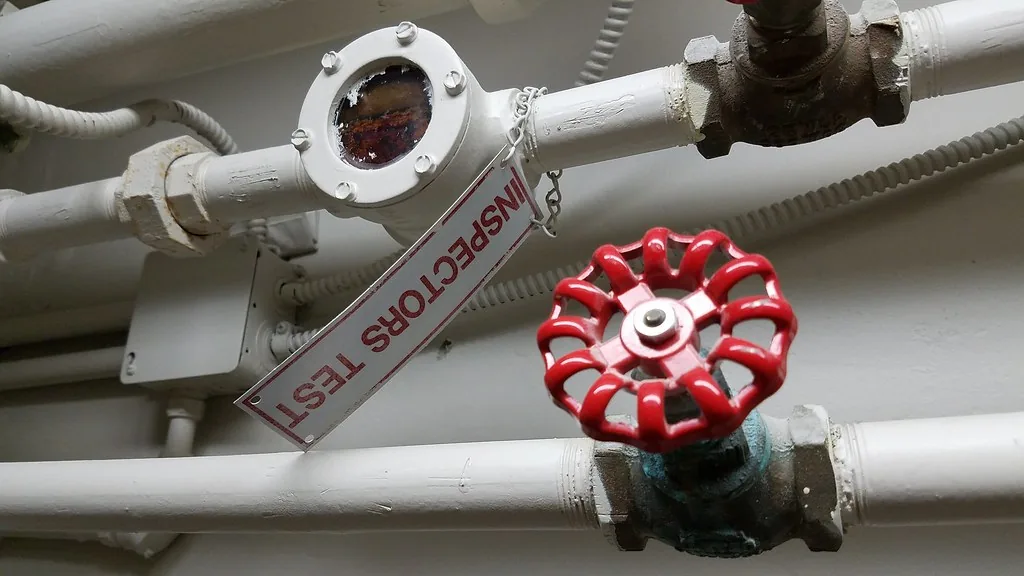
A fire alarm inspection and a sprinkler inspection are two different jobs under two different standards. The alarm is tested under NFPA 72; the sprinkler system is inspected under NFPA 25, which Essential prices as a separate line from the fire alarm inspection. Where they meet is at the waterflow switch and the tamper switch on the sprinkler riser: those are alarm devices, and the alarm technician tests them, every six months under the 2025 edition.
Security Dynamics’ inspection service page states its permitted business number P00747 is for classification C4, fire alarm systems, and that the record does not authorize separate sprinkler, extinguisher or suppression-system work. If your building has sprinklers, budget for a second inspection and a second report. Our commercial sprinkler systems guide explains what that inspection involves, and our fire extinguisher inspection page covers the third annual item on most buildings’ list.
Insurance and the Paperwork
The test is only worth what the report proves. American Fire Protection Group puts the insurance side plainly: “If you cannot provide proof of your annual inspections and test, your insurance company may reject your claim.” The fire official needs the same proof when the certificate of inspection comes due.
Security Dynamics’ inspection service page describes its report as showing what was inspected or tested, the result, the location, any limitation, and the person responsible for the next action. Whoever you hire, ask for those five things in writing, dated and signed, and keep the report with the building’s fire file. The inspection checklist lists the other documents the fire official will ask for.
What Fire Safety Costs per Year, All In
Putting the published figures side by side gives a yearly budget line for a monitored commercial fire alarm, before repairs. These are the ranges from the sources above, not Security Dynamics prices.
| Cost | Published range | Source |
|---|---|---|
| Annual inspection and test | $300 – $8,000 by building size | Total Fire Protection, Feb 2026 |
| Semi-annual visit, if billed separately | $150 – $400 | Total Fire Protection, Feb 2026 |
| Monitoring | $300 – $1,200 ($25 – $100 a month) | Total Fire Protection, Feb 2026 |
| NJ life hazard use registration | $108 – $4,781 by type | N.J.A.C. 5:70-2.9 |
| Or non-life-hazard registration, Hamilton Township | $50 – $700 by floor area | Chapter 215, Section 215-8 |
| Batteries, when they fail the load test | $30 – $200 | Total Fire Protection, Feb 2026 |
Swipe the table sideways to see every column.
Replacing the panel is a different budget. Our panel replacement cost guide and installation cost guide cover those numbers.
How Security Dynamics Quotes an Inspection
Security Dynamics is based in Hamilton Township and quotes each building on its own. Its inspection service page lists what the quote is built from: the panel make and model, the device inventory, the monitoring arrangement, the occupancy, prior reports, and the fire official. This guide shows no Security Dynamics price. To start, book through the commercial fire alarm inspection service or see the fire alarm systems page for a free inspection.
NJ burglar alarm business license 34BX00005700; qualifying license holder John Di Veronica holds 34BA00089500. Permitted business P00747 for C4 fire alarm system work.
Frequently Asked Questions
How much does a fire alarm inspection cost?
Cost guides checked in October 2026 put the annual inspection and test of a commercial fire alarm at $300 to $1,000 for a small building with 25 to 50 devices, $1,000 to $3,500 for a medium building with 50 to 150 devices, and $3,500 to $8,000 for a large building with 150 to 500 devices (Total Fire Protection, February 2026). County Fire’s 2026 New York City table runs $300 to $500 for under 50 devices up to $1,500 to $3,500 or more for 400 or more. These are other companies’ published prices, not a Security Dynamics quote; Security Dynamics quotes each building on its own.
How much does a fire alarm inspection cost per device?
Total Fire Protection’s February 2026 guide works out to $12 to $20 per device in a small building and $18 to $25 in a large one. Up To Code’s March 2026 guide prices the functional-testing labor at $6 to $15 per device, with smoke detector sensitivity testing at another $5 to $15 per detector when it is due. Up To Code also notes that a 200-device system costs roughly four times what a 50-device system costs.
How often does a commercial fire alarm have to be inspected in New Jersey?
Two schedules apply. NFPA 72 sets the contractor’s testing schedule: most devices get a visual inspection every six months and a functional test every year, smoke detector sensitivity is tested in year one and then every two years, and under the 2025 edition waterflow and tamper switches are tested every six months (as summarized by Up To Code, March 2026). Separately, the New Jersey Uniform Fire Code requires the fire official to inspect a registered life hazard use at least once every 12 months for Type A and B uses and once every three months for Type C and D uses (N.J.A.C. 5:70-2.5). Ask your fire official which NFPA 72 edition applies to your building.
How long does a fire alarm inspection take?
Action Fire & Alarm’s November 2025 guide says most inspections take two to four hours, and large facilities can take a full day or several visits. Security Dynamics’ own inspection page says a small office system with one panel is often completed in a partial day, while large or multi-tenant facilities can require multiple visits, coordinated notification and after-hours testing windows.
What New Jersey fees do I pay on top of the contractor’s test?
If the building is a registered life hazard use, the state’s annual registration fee runs from $108 (Type Aa) to $4,781 (Type Dc), and no K-12 school building pays more than one $214 fee (N.J.A.C. 5:70-2.9). Non-life-hazard businesses pay their town’s registration fee instead: Hamilton Township charges $50 for 500 square feet or less up to $700 for 200,000 to 300,000 square feet (Chapter 215, Section 215-8). Permit fees under the state schedule are $54 (Type 1) to $641 (Type 4). These go to the state or the township, not to the inspection contractor.
What happens if the inspection finds a problem?
Repairs are billed separately from the test (Redwood City Alarms, May 2026), and a return visit to confirm the fix is billed as a re-inspection: $50 to $200 at Total Fire Protection, $150 to $350 at Up To Code. If a required fire protection system is out of service, New Jersey’s fire code says the fire department and the fire code official must be notified immediately, and if the fire official finds an imminent hazard the building is either evacuated or an approved fire watch is provided until the system is back in service (N.J.A.C. 5:70-3.2, Section 901.7). Hamilton Township bills its fire watch coverage at $52 per hour per person.
How much should a fire alarm system cost?
For a new system rather than a test, Grice Systems’ 2025 guide puts installation at $1.25 to $2.25 per square foot in new construction and $5 to $13 per square foot in a retrofit, with a 2,500 square foot retail space at $6,000 to $11,000 and a 10,000 square foot office at $12,000 to $25,000. Our fire alarm installation cost guide and panel replacement cost guide go deeper on both.
How much does a smoke alarm check cost?
In a commercial system, smoke detector sensitivity testing is priced per detector: $5 to $15 at Up To Code (March 2026) and $8 to $15 at Essential (September 2026), due in year one and then every two years. For a New Jersey home sale, the state’s certificate of smoke alarm, carbon monoxide alarm and portable fire extinguisher compliance costs $45 when requested more than 10 business days before the change of occupant, $90 at four to 10 business days, and $161 with fewer than four (N.J.A.C. 5:70-2.9), and the local fire official does that inspection, not an alarm contractor.
Does the fire official’s inspection replace the contractor’s NFPA 72 test?
No. The fire official checks the building for compliance with the fire code and issues the certificate of inspection. The owner is responsible for keeping the fire and life safety systems in operable condition, and the people who inspect, test and maintain those systems must meet the qualification requirements in N.J.A.C. 5:74 (N.J.A.C. 5:70-3.2, Section 901.6.5). The contractor’s test is what proves the system works; the fire official’s inspection is what checks that you had it done.
Does Security Dynamics inspect sprinklers too?
Security Dynamics holds New Jersey permitted business number P00747 for classification C4, fire alarm systems. That record does not authorize separate sprinkler, extinguisher or suppression-system work. The waterflow and tamper switches that connect a sprinkler system to the fire alarm are tested as part of the fire alarm test. The sprinkler system itself is inspected under NFPA 25 as a separate inspection with its own requirements.
Sources for the answers above are linked in the sections above; the installation figures are from Grice Systems.
Get an Inspection Quote for Your Building
Tell us the panel, roughly how many devices, whether the building has sprinklers, and when the fire official last visited. Security Dynamics will quote the NFPA 72 test for your building and tell you what the report will cover.
Related Fire Alarm Services and Guides
- Fire Alarm SystemsCode-compliant fire alarm installation and service in New Jersey, with a free inspection.
- Commercial Fire Alarm InspectionBook the NFPA 72 inspection and test for your building.
- Commercial Fire Inspection ChecklistWhat the fire official checks and the documents to have ready.
- NFPA 72 Requirements in New JerseyThe code behind the inspection, testing and maintenance schedule.
Prices, fees and code text on this page were checked against each linked source on October 22, 2026. Contractor prices are other companies’ published figures from several states; New Jersey fees are the state schedule and Hamilton Township’s ordinance as published on that date. Ask your fire official which NFPA 72 edition and which local fee schedule apply to your building.