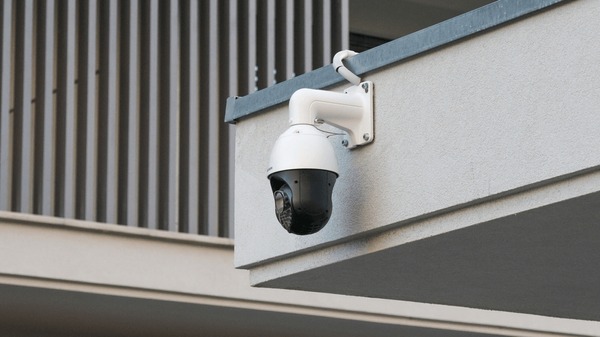
You need security cameras for your business. You start researching and immediately hit the first fork in the road: IP cameras or analog cameras? One side says IP is the future and analog is dead. The other side says analog still gets the job done for a fraction of the price. Both sides have a point -- and both sides are selling something.
At Security Dynamics Inc., we have been installing commercial surveillance systems across New Jersey for 37 years. We install both IP and analog systems every week, and we have watched this technology evolve from grainy black-and-white monitors to crystal-clear 4K streams you can pull up on your phone from anywhere in the world. This guide gives you the honest comparison so you can make the right call for your building, your budget, and your actual security needs.
What Are IP Cameras?
IP cameras (Internet Protocol cameras) are digital cameras that send video over a computer network. Think of them like tiny computers with a lens. Each camera has its own IP address, connects to your network the same way a laptop or printer does, and transmits video as digital data packets. The video is recorded on a device called an NVR (Network Video Recorder) or stored directly in the cloud.
How IP Cameras Work
An IP camera captures video, compresses it digitally (using H.265 or H.264 encoding), and sends that data over an Ethernet cable or Wi-Fi connection to the NVR or cloud storage. Because the signal is digital from start to finish, the image quality stays pristine regardless of cable length. A camera 500 feet from the recorder produces the same quality image as one 10 feet away.
Most IP cameras use Power over Ethernet (PoE), which means a single Ethernet cable delivers both the video signal and electrical power to the camera. One cable, one connection, one cable run. This is a significant installation advantage we will cover in detail below.
Key Characteristics of IP Cameras
- Resolution: 2MP (1080p) to 32MP (8K). Most commercial systems use 4MP to 8MP cameras.
- Connection: Ethernet cable (Cat5e/Cat6) or Wi-Fi
- Power: PoE (power + data on one cable) or separate power supply
- Recording: NVR (Network Video Recorder) or cloud storage
- Processing: On-camera processing enables edge analytics (motion detection, person detection, license plate reading) without loading the recorder
- Remote access: Built-in -- view live or recorded video from any device with internet access
- Audio: Most IP cameras include built-in microphones and some include speakers for two-way audio
What Are Analog Cameras?
Analog cameras capture video and transmit it as an analog electrical signal over coaxial cable (the same type of cable used for cable TV) to a DVR (Digital Video Recorder). The DVR converts that analog signal into digital format for storage and playback. The camera itself does no digital processing -- it is essentially a lens and an image sensor that outputs a continuous electrical signal.
How Analog Cameras Work
An analog camera sends a continuous video signal through a coaxial cable to the DVR. The DVR digitizes the signal, compresses it, and writes it to a hard drive. Each camera needs its own dedicated coaxial cable run back to the DVR, plus a separate power cable (or a combined Siamese cable that bundles both). The quality of the image depends on the camera sensor, the cable quality, and the cable length -- signal degrades over long runs.
Modern Analog: HD-TVI, HD-CVI, and AHD
When people say “analog cameras” in 2026, they usually mean modern HD analog technologies like HD-TVI (Hikvision), HD-CVI (Dahua), or AHD (generic). These are still analog signals transmitted over coaxial cable, but they deliver much higher resolution than the old NTSC/PAL standard. Modern analog cameras can produce 1080p, 3MP, 5MP, and even 8MP images over coax. This has narrowed the resolution gap with IP cameras significantly.
Key Characteristics of Analog Cameras
- Resolution: 720p to 8MP (most common is 1080p to 5MP in HD analog)
- Connection: Coaxial cable (RG59 or RG6)
- Power: Separate 12V DC power supply or Siamese cable (video + power bundled)
- Recording: DVR (Digital Video Recorder)
- Processing: Minimal -- the camera captures and transmits; the DVR does the heavy lifting
- Remote access: Available through DVR apps, but less capable than IP systems
- Audio: Requires separate audio cable in most cases
Head-to-Head Comparison: IP vs. Analog Cameras
Here is how the two technologies stack up across every factor that matters for a business security system:
| Factor | IP Cameras | Analog Cameras |
|---|---|---|
| Maximum Resolution | Up to 32MP (8K) | Up to 8MP (4K) with HD-TVI/CVI |
| Typical Business Resolution | 4MP-8MP | 1080p-5MP |
| Cable Type | Cat5e/Cat6 Ethernet | RG59/RG6 coaxial + power cable |
| Maximum Cable Run | 328 ft (100m) per segment; extendable with switches | Up to 1,600 ft (500m) with signal loss |
| Power Delivery | PoE -- one cable for power + data | Separate power supply or Siamese cable |
| Recording Device | NVR (Network Video Recorder) | DVR (Digital Video Recorder) |
| Storage Options | NVR, NAS, cloud, on-camera SD card | DVR hard drive only |
| Scalability | Add cameras to any network switch; no re-cabling | Each camera needs its own cable run to DVR |
| Remote Access | Full-featured apps; live, playback, PTZ control | Basic DVR apps; limited features remotely |
| Video Analytics | AI-powered: person/vehicle detection, facial recognition, license plate reading, line crossing, loitering alerts | Basic motion detection only (DVR-based) |
| Audio | Built-in mic and speaker (two-way audio) | Separate audio cable required; rarely used |
| Camera Cost | $200-$800 per camera | $50-$200 per camera |
| Recorder Cost | $300-$2,000 (NVR) | $150-$800 (DVR) |
| Installation Complexity | Moderate -- requires network configuration | Simple -- plug in cable, camera works |
| Cybersecurity Risk | Requires proper network security (VLAN, passwords, firmware updates) | Minimal -- closed circuit, not network-connected by default |
| Best For | New installations, large systems, analytics, remote monitoring, high-resolution needs | Budget-conscious upgrades, small systems, simple monitoring, existing coax infrastructure |
When IP Cameras Are the Better Choice
For most new commercial installations in 2026, IP cameras are the right answer. Here is when they clearly win:
New Installations (No Existing Cabling)
If you are building a new office, warehouse, or retail space and no security cabling exists, IP is the default. You are running new cable either way. Running Cat6 Ethernet for IP cameras costs the same as running coaxial for analog, but Cat6 gives you a more capable, future-proof system. Your network infrastructure does double duty -- it supports cameras, computers, phones, Wi-Fi access points, and anything else that needs a network connection.
Large Systems (16+ Cameras)
IP systems scale much more efficiently than analog. Adding a camera to an IP system means plugging it into the nearest network switch -- even one on a different floor or building. Adding a camera to an analog system means running a new cable all the way back to the DVR. For a 64-camera warehouse, that cabling difference alone can save thousands of dollars in labor and materials.
Analytics and Smart Detection
If you need your cameras to do more than just record, IP is the only real option. Modern IP cameras include on-board AI that can distinguish between a person, a vehicle, and an animal -- so you get alerts that actually matter instead of false alarms triggered by a tree branch blowing in the wind. Advanced analytics include:
- Person and vehicle detection -- the camera ignores animals, shadows, and weather, only alerting on humans or vehicles
- Facial recognition -- identify known individuals or flag unknown persons in restricted areas
- License plate recognition (LPR) -- automatically read and log every plate entering your parking lot
- Line crossing and intrusion detection -- draw a virtual line on screen; get alerted when someone crosses it
- Loitering detection -- alert when someone remains in an area longer than the threshold you set
- People counting -- track occupancy for compliance, staffing, or retail analytics
- Heat mapping -- see traffic patterns through your space over time
Analog cameras can do basic motion detection through the DVR, but they cannot distinguish between a person and a plastic bag blowing across the parking lot. That distinction matters enormously for businesses that need reliable, actionable alerts.
Remote Monitoring
If you need to watch your business from home, from a second location, or from your phone while traveling, IP cameras provide a dramatically better remote experience. You get full-resolution live viewing, smooth playback with timeline scrubbing, PTZ (pan-tilt-zoom) camera control, and push notifications with video clips. Analog DVR apps work, but the experience is clunky, the resolution is limited, and features like PTZ control and smart search are either missing or unreliable.
High-Resolution Requirements
If you need to clearly identify faces, read license plates, or see fine detail at a distance, IP cameras deliver. A single 8MP (4K) IP camera can cover an area that would require two or three analog cameras to cover at equivalent detail. In retail, a 4K camera at the cash register captures every bill denomination and coin. In a parking lot, a 4K camera with LPR reads plates at 60+ feet. That level of detail can be the difference between a usable incident investigation and a useless blur.
Integration with Access Control and Alarms
IP cameras integrate natively with other IP-based security systems. When someone badges into a door, the nearest camera starts recording and tags the event. When the intrusion alarm triggers, all cameras switch to high-resolution continuous recording. This event-driven integration creates a complete security picture that standalone analog cameras cannot provide.
When Analog Cameras Still Make Sense
Analog is not dead. In certain situations, it is the smarter business decision:
Existing Coaxial Infrastructure
If your building already has coaxial cable runs from a previous security system, replacing just the cameras and DVR with modern HD analog equipment (HD-TVI, HD-CVI, AHD) gives you a massive quality upgrade for a fraction of the cost of a full IP conversion. You reuse every cable in the building. This is the single most common reason we still install analog cameras -- it saves the client thousands in cabling labor.
Tight Budget, Immediate Need
A 4-camera analog system with a DVR can cost $600-$1,200 installed. The equivalent IP system starts at $1,500-$3,000. If the budget is tight and you need cameras now -- not next quarter when the budget frees up -- analog gets you coverage today. You can always upgrade to IP later, and a good installer will design the analog system so the transition is as painless as possible.
Small, Simple Systems
A 4-camera system monitoring two entrances, a parking lot, and a back door does not need AI analytics, cloud storage, or facial recognition. Analog handles this use case perfectly well. The footage is clear enough to identify individuals, the DVR records 30 days of video, and you can pull up playback when you need it. Not every business needs a surveillance command center.
Environments with No Network Infrastructure
Some locations -- remote warehouses, construction sites, agricultural properties -- have no existing network infrastructure and limited internet connectivity. Analog cameras work independently of the network. They record locally to the DVR and require no internet connection, no network configuration, and no cybersecurity concerns. You run power and coaxial, and the system works.
Cybersecurity Simplicity
Analog cameras are not network devices. They cannot be hacked remotely, they do not need firmware updates, and they create no entry point into your business network. For small businesses without IT support, this simplicity has real value. IP cameras, when improperly configured, can become a cybersecurity liability. (We mitigate this on every IP installation with VLANs, strong passwords, and firmware management -- but the risk is non-zero.)
Hybrid Systems: The Best of Both Worlds
Here is what many NJ businesses do not realize: you do not have to choose one or the other. Hybrid systems let you run both IP and analog cameras on the same recorder, and they are one of the most popular options we install in 2026.
How Hybrid Systems Work
A hybrid DVR (sometimes called a tribrid or pentabrid recorder) accepts both coaxial inputs from analog cameras and network inputs from IP cameras. You keep your existing analog cameras on their existing coax cables, and you add new IP cameras wherever you need higher resolution, analytics, or new coverage areas. Both camera types display on the same interface, record to the same hard drive, and are accessible from the same mobile app.
The Gradual Upgrade Path
This is the path most businesses follow:
- Phase 1: Replace the old DVR with a hybrid recorder. Keep all existing analog cameras. Immediate improvement in recording quality, storage, and remote access.
- Phase 2: Add IP cameras to new coverage areas -- entrances that need facial recognition, parking lots that need LPR, loading docks that need analytics.
- Phase 3: As analog cameras age and fail, replace them one at a time with IP cameras on new Ethernet cable runs.
- Phase 4: Eventually the entire system is IP, and the transition happened gradually with zero downtime and manageable annual budgets.
This approach avoids the “rip and replace” sticker shock of converting everything to IP at once. A full 16-camera IP conversion can cost $15,000-$25,000. The phased hybrid approach spreads that investment over 2-4 years while delivering immediate improvements at every stage.
When We Recommend Hybrid
- Existing analog system that still works but needs expansion
- Budget allows for some IP cameras but not a full conversion
- Specific areas need analytics (entrances, parking) while others just need basic recording (hallways, storage)
- Building has a mix of easy-to-cable and difficult-to-cable areas
Cost Comparison: What You Will Actually Pay
Here is what NJ businesses should budget in 2026 for each technology:
Per-Camera Hardware Cost
| Component | IP Camera System | Analog Camera System |
|---|---|---|
| Camera (per unit) | $200-$800 | $50-$200 |
| Recorder | $300-$2,000 (NVR) | $150-$800 (DVR) |
| PoE Switch (IP only) | $100-$500 | Not needed |
| Power Supply | Included via PoE | $50-$150 (power distribution box) |
| Cabling (per camera, installed) | $75-$200 (Cat6) | $75-$250 (coaxial + power) |
| Hard Drive (4TB) | $100-$200 | $100-$200 |
Total System Cost by Size
| System Size | IP System (installed) | Analog System (installed) | Hybrid (installed) |
|---|---|---|---|
| 4 cameras | $2,500-$5,000 | $800-$2,000 | $1,500-$3,500 |
| 8 cameras | $4,500-$9,000 | $1,500-$3,500 | $3,000-$6,500 |
| 16 cameras | $8,000-$18,000 | $3,000-$7,000 | $5,500-$12,000 |
| 32 cameras | $15,000-$35,000 | $6,000-$14,000 | $10,000-$24,000 |
Important note on cost: These ranges include professional installation. The wide range reflects differences in camera quality (basic 2MP vs. premium 4K with analytics), recorder capability, cable run complexity (easy drop ceiling vs. concrete walls), and your specific feature requirements. We provide exact quotes after a free site survey -- no surprises.
Ongoing Costs
Analog systems have virtually zero ongoing costs beyond hard drive replacement every 3-5 years ($100-$200). IP systems have the same hard drive costs, plus optional cloud storage subscriptions if you want off-site backup ($10-$50/month for 4-16 cameras). If you keep everything local on the NVR, IP ongoing costs are identical to analog. The cloud subscription is a choice, not a requirement.
4K vs. 1080p vs. 720p: What Resolution Do You Actually Need?
Resolution is the most over-marketed spec in the security camera industry. More megapixels does not automatically mean better security. Here is what each resolution level actually gives you and where it matters:
720p (1MP) -- Basic Identification
720p cameras produce a clear enough image to tell a person is there and identify general characteristics (height, build, clothing color). You cannot reliably identify a face beyond 15-20 feet or read a license plate beyond 10 feet. In 2026, 720p is outdated for any new installation. If your existing system is 720p and still working, it provides basic coverage, but upgrading to 1080p or better should be on the list.
1080p (2MP) -- Standard Commercial
1080p is the current baseline for commercial security. You can identify faces at 25-30 feet, read license plates at 20-25 feet, and clearly see actions and events. For hallways, interior corridors, storerooms, and general monitoring, 1080p is sufficient. This is what most of our analog HD installations use, and it gets the job done for the vast majority of business security needs.
4MP -- The Sweet Spot
4MP cameras (2560x1440) deliver noticeably more detail than 1080p at a modest price premium. You can digitally zoom into footage and still identify faces and read text. This is the resolution we recommend most for NJ businesses running IP systems. It provides excellent detail without the storage demands of 4K, and the cameras are priced competitively ($250-$400 for quality commercial models).
4K / 8MP -- Maximum Detail
4K cameras are overkill for most interior applications but excellent for wide exterior views, parking lots, loading docks, and any location where you need to identify fine details at 50+ feet. A single 4K camera can cover an area that would need two 1080p cameras, potentially saving on total camera count and installation labor. The tradeoff: 4K generates roughly four times the storage of 1080p, so you need larger hard drives and more network bandwidth.
When Resolution Matters Most
- Cash registers and point-of-sale: 4MP minimum -- you want to see denominations and transaction details
- Parking lots (license plates): 4K with LPR camera, or dedicated 2MP LPR camera with narrow field of view
- Building entrances (facial ID): 4MP minimum, mounted at face level
- General interior monitoring: 1080p-4MP is sufficient
- Warehouse wide-angle: 4K to cover maximum area with readable detail
- Hallways and corridors: 1080p is fine -- limited area, close range
The PoE Advantage: Why One Cable Changes Everything
Power over Ethernet (PoE) is one of the most practical advantages of IP cameras, and it is often undersold. Here is why it matters more than you might think:
One Cable Does It All
A single Cat5e or Cat6 Ethernet cable carries both the video data and the electrical power to the camera. With analog, you need either a separate power cable alongside the coaxial video cable, or a Siamese cable (video and power bundled together, but still two conductors). PoE cuts the cable count in half and eliminates the need for power outlets or junction boxes near each camera location.
Centralized Power Management
All camera power comes from the PoE switch or NVR, which sits in your server closet or equipment room alongside your UPS (battery backup). This means every camera on the system is backed up by one central battery. When the power goes out, every camera keeps recording. With analog, you need individual battery backups at each power supply location -- or accept that your cameras go dark during a power outage, which is exactly when you need them most.
Easier Troubleshooting
If a PoE camera goes offline, you check one cable and one port. If an analog camera goes offline, you check the video cable, the power cable, the power supply, the power adapter, and every connection point in between. PoE reduces troubleshooting variables by half.
Flexible Camera Placement
Because PoE cameras do not need a nearby power source, you can mount them anywhere you can run a network cable -- the middle of a parking lot pole, the peak of a roofline, a warehouse ceiling 30 feet up. Analog cameras need power at or near the camera, which often means running a dedicated electrical circuit to remote locations. That electrical work adds cost and requires a licensed electrician.
Cloud Storage vs. Local Storage
Where your video footage lives has real implications for cost, reliability, and legal compliance:
Local Storage (NVR or DVR)
Both IP and analog systems can store video locally on hard drives inside the recorder. This is the standard approach and has zero ongoing cost beyond hard drive replacement. Local storage gives you complete control over your footage -- it never leaves your building. The risk: if someone steals the recorder or a fire destroys it, you lose all footage. This is why we always recommend mounting the recorder in a locked equipment room, not behind the front desk.
Cloud Storage (IP Cameras Only)
IP cameras can upload footage to cloud servers, creating an off-site backup that survives theft, fire, or recorder failure. Cloud storage is a subscription service, typically $3-$10 per camera per month for 30 days of retention. Some cloud systems can replace the NVR entirely -- cameras record directly to the cloud with no local recorder needed. This reduces hardware costs but requires reliable, fast internet.
Hybrid Storage (Best Practice)
The approach we recommend for most NJ businesses: record locally to the NVR (primary) and back up critical cameras to the cloud (secondary). Your entrance cameras, cash register cameras, and parking lot cameras upload to the cloud. Interior hallway cameras stay local-only. This gives you the best of both worlds -- fast local access for daily review and a theft-proof cloud backup for the cameras that matter most -- without paying cloud fees for every camera on the system.
Storage Capacity Planning
| Resolution | Storage per Camera per Day | 8 Cameras / 30 Days |
|---|---|---|
| 1080p (H.265) | ~15 GB | ~3.6 TB |
| 4MP (H.265) | ~25 GB | ~6 TB |
| 4K / 8MP (H.265) | ~50 GB | ~12 TB |
These numbers assume continuous recording with H.265 compression. Motion-based recording (cameras only record when activity is detected) can reduce storage requirements by 50-75%, depending on how busy the scene is. We calculate exact storage requirements during the system design phase so you never run out of recording capacity.
NJ Privacy and Legal Considerations for Security Cameras
Installing security cameras in New Jersey comes with legal responsibilities that apply regardless of whether you choose IP or analog. Here is what every NJ business owner needs to know:
Video Recording Is Generally Permitted
New Jersey law allows video surveillance in public and commercial areas where there is no reasonable expectation of privacy. You can legally record lobbies, hallways, parking lots, retail floors, warehouses, loading docks, and building exteriors. You cannot record in restrooms, changing rooms, locker rooms, or any area where people have a reasonable expectation of privacy.
Audio Recording Is Restricted
New Jersey is a one-party consent state for audio recording under the NJ Wiretapping and Electronic Surveillance Act (N.J.S.A. 2A:156A). This means at least one party to a conversation must consent to the recording. For business security cameras with audio capabilities (common on IP cameras with built-in microphones), the safest practice is to post clear signage notifying employees and visitors that audio and video recording is in progress. This constructive notice eliminates most legal risk.
Employee Notification
While NJ law does not explicitly require employers to notify employees about video surveillance in common work areas, best practice -- and many employment attorneys will advise -- is to include surveillance disclosure in the employee handbook and post visible signage. This protects the business from claims that surveillance was covert or conducted in bad faith.
Signage Best Practices
Post signs at building entrances stating: “Premises are monitored by video and audio surveillance for security purposes.” This provides constructive consent for audio recording, deters criminal activity, and establishes that visitors and employees are aware of the system. The signs do not need to specify camera locations or technology type.
Data Retention and Access
NJ does not have a specific law mandating how long businesses must retain security footage. However, if your business is subject to industry regulations (healthcare, financial services, gaming), those regulations may specify retention periods. General best practice is 30-90 days of retention. If an incident occurs, preserve relevant footage immediately -- once it is overwritten, it is gone.
IP Camera Cybersecurity and Privacy
IP cameras that are improperly secured can be accessed remotely by unauthorized parties. This creates a privacy violation for anyone recorded by the system. NJ businesses using IP cameras should ensure cameras are on a separate network (VLAN), all default passwords are changed, firmware is kept current, and remote access requires strong authentication. A professional installer handles all of this during setup.
Security Dynamics Installation: What to Expect
Whether you choose IP, analog, or hybrid, here is how we handle the installation process for NJ businesses:
Free Site Survey
We visit your location, walk the property with you, identify camera positions, assess cabling paths, check existing infrastructure, and discuss your specific security concerns. We do not bring a pre-designed package -- we design around your building and your needs. The survey takes 30-60 minutes and there is no cost or obligation.
System Design and Proposal
After the survey, we prepare a detailed proposal that includes a camera map (where each camera goes and what it covers), equipment specifications, cable routing plan, recording capacity calculation, total cost with itemized line items, and expected installation timeline. You know exactly what you are getting and what it costs before we start.
Professional Installation
Our licensed technicians handle everything: cable runs, camera mounting, recorder setup, network configuration (for IP systems), power distribution, and system programming. We install cable in conduit where required by code and always use commercial-grade mounting hardware rated for the camera weight and environment (indoor vs. outdoor, wind load, vandal resistance).
Network Security (IP Systems)
For IP camera installations, we configure cameras on an isolated VLAN (Virtual Local Area Network) separate from your business network. This means even if a camera were compromised, the attacker cannot reach your computers, servers, or other business systems. We change all default passwords, disable unnecessary services (Telnet, UPnP), and update firmware to the latest version before handing over the system.
Training and Handoff
We do not hand you a manual and leave. We train your designated staff on the system: how to view live cameras, how to play back recorded footage, how to search for events, how to export video clips for law enforcement or insurance, and how to use the mobile app. We leave a simple quick-reference guide specific to your system.
Ongoing Support
Security Dynamics provides ongoing service contracts that include preventive maintenance (camera cleaning, connection checks, firmware updates), emergency service (camera failure, recorder issues), system health monitoring, and user administration support. You call a local NJ company at (609) 394-8800 -- not a national call center.
Frequently Asked Questions
Can I mix IP and analog cameras on the same system?
Yes. A hybrid DVR/NVR accepts both coaxial inputs from analog cameras and network inputs from IP cameras. This is the most popular option for businesses upgrading an existing analog system. You keep what works and add IP cameras where you need better resolution or analytics. Both camera types display on the same screen and are accessible from the same mobile app.
How long do security cameras last?
Commercial-grade security cameras typically last 5-10 years. IP cameras may have a slightly shorter practical lifespan (5-8 years) because firmware support eventually ends and newer analytics capabilities emerge. Analog cameras are simpler and can last 8-12 years since there is less to go wrong. Hard drives in recorders should be replaced every 3-5 years as a preventive measure -- they run 24/7 and are the most likely component to fail.
Do IP cameras slow down my business network?
Not when installed correctly. We install IP cameras on a separate VLAN with their own network switch. Camera traffic never touches your business computers, phones, or Wi-Fi. The only shared resource is the internet connection (if you use cloud storage or remote access), and a single 4K camera uses roughly 8-12 Mbps of bandwidth -- a fraction of what a modern business internet connection provides.
What happens to my cameras during a power outage?
With PoE IP cameras, the entire system runs through a central UPS (uninterruptible power supply) in your equipment room. When power drops, the UPS keeps everything running for 30-60 minutes depending on the battery size. Analog cameras need separate UPS units at each power supply location. We include UPS planning in every system design because cameras that go dark during a power outage are cameras that miss the break-in that happens during the power outage.
Can I view my cameras on my phone?
Yes, both IP and analog systems support mobile viewing through manufacturer apps. IP camera apps are significantly more capable -- smooth live viewing at full resolution, timeline-based playback, push notifications with video clips, and PTZ camera control. Analog DVR apps provide basic live and playback viewing but with lower resolution, slower performance, and fewer features.
Are wireless cameras a good option for businesses?
For most commercial applications, no. Wi-Fi cameras are convenient for home use, but they introduce reliability issues in business environments: signal interference from other equipment, bandwidth limitations, security vulnerabilities, and battery concerns (for truly wireless models). Wired cameras -- whether IP over Ethernet or analog over coaxial -- are more reliable, more secure, and what we recommend for any business that depends on its surveillance system.
How many cameras does my business need?
There is no universal formula, but a useful starting point: one camera per entrance/exit, one per cash register or high-value area, one covering each parking lot zone, and additional cameras for hallways, loading docks, and any area with history of incidents. A small retail store might need 4-6 cameras. A mid-size office needs 8-12. A warehouse can need 16-32+. The free site survey is where we determine the exact count based on your layout and risk profile.
What is the difference between an NVR and a DVR?
A DVR (Digital Video Recorder) receives analog video signals from cameras over coaxial cable and converts them to digital format for storage. The DVR does all the processing. An NVR (Network Video Recorder) receives already-digitized video from IP cameras over the network. The cameras do the processing; the NVR just stores and manages the footage. NVRs are generally more powerful, offer better search capabilities, and support higher camera counts because the processing load is distributed across the cameras rather than concentrated in the recorder.
Should I get cameras with night vision?
Yes -- every exterior camera and most interior cameras should have infrared (IR) night vision capability. Both IP and analog cameras offer IR night vision, typically providing clear black-and-white footage in complete darkness at ranges of 60-150 feet depending on the camera model. Some premium IP cameras offer “ColorVu” or similar technology that produces full-color footage at night using supplemental white light or ultra-sensitive sensors. This is especially useful for identifying vehicle colors and clothing in parking lots.
Can security camera footage be used as evidence in NJ?
Yes. Security camera footage is regularly admitted as evidence in NJ criminal and civil proceedings. To maximize evidentiary value: ensure timestamps are accurate and synchronized across all cameras, maintain footage integrity (do not edit original recordings), export clips in their native format, and document the chain of custody from the time the footage is retrieved. Higher-resolution footage (4MP+) provides stronger evidence because individuals and details are more clearly identifiable. This is one area where the investment in IP camera resolution directly pays for itself.
Next Steps
The right camera technology depends on your building, your budget, your existing infrastructure, and what you need the system to actually do. For most new commercial installations in 2026, IP cameras are the strongest choice. For businesses with existing coaxial cabling and a tight budget, modern HD analog delivers excellent results. And for everyone in between, hybrid systems let you get the best of both technologies while upgrading at your own pace.
Security Dynamics Inc. installs IP, analog, and hybrid surveillance systems across New Jersey. We have been doing this for 37 years, we hold NJ burglar alarm and fire alarm licenses, and we design every system around the building and the client -- not a sales quota.
Get a free site survey: Call (609) 394-8800 or email sdynamicsnj@gmail.com. We will visit your property, evaluate your needs and existing infrastructure, and recommend the right camera system -- IP, analog, or hybrid -- with a detailed proposal and no obligation.